



If you use a vibrator, you need to clean it. Not “when you get around to it.” Not “I’ll just rinse it off and it’ll be fine.” Thoroughly, correctly, every single time. (New to sex toys? Start with our Complete Beginner’s Guide first, then come back here.)
I learned this the hard way. In my early days of testing toys, I got lazy with a TPE vibrator. Left it in a drawer for two weeks without cleaning. When I finally pulled it out, it had developed a sticky, almost-grainy texture that wouldn’t wash off — and a faint, sour smell I will never forget. That toy went straight into the trash.
The lesson cost me about sixty bucks and a non-trivial amount of dignity. So let me save you the same experience.
This isn’t about being fussy. Here’s what’s at stake:
Bacterial growth is fast. Your body’s fluids are nutrient-rich and warm — the perfect petri dish for bacteria. In the time between use and cleaning, microbes start multiplying.
Different body zones have different bacteria. If you use a toy anally and then vaginally without cleaning between (or without changing the condom), you can transfer E. coli and other anal bacteria to your vaginal area. That’s not a cautious hypothetical — it’s a well-documented cause of bacterial vaginosis and UTIs.
Porous materials trap organisms. If your toy is made of TPE, TPR, PVC, or jelly, it has microscopic pores that bacteria, yeast, and mold spores can burrow into — and that no amount of surface cleaning will fully reach. Over time, a TPE toy can become a reservoir of organisms that re-infect you with every use.
Material degrades faster without cleaning. Silicone, despite being non-porous, still breaks down faster when exposed to body fluids and heat without regular cleaning.
Medical-grade silicone is non-porous, which means bacteria can’t penetrate below the surface. (If you’re not sure what material your toy is made from, read our Materials Guide: Silicone vs TPE vs ABS.) Cleaning is straightforward — you have three options, from basic to thorough:
Standard cleaning (every time)
Deep cleaning (weekly, or between partners)
Sanitizing (between partners, or if a toy’s been sitting unused for months)
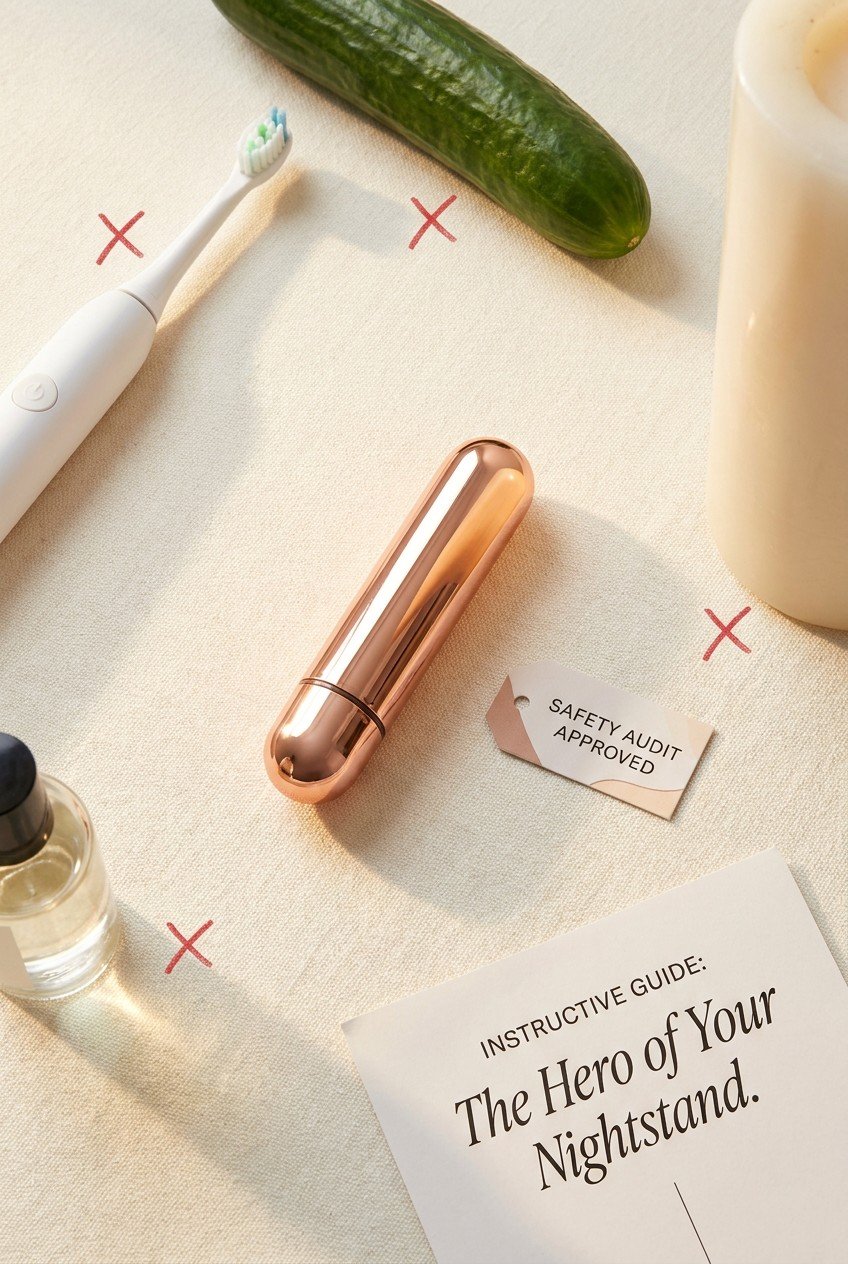
What NOT to do with silicone toys:
ABS is the hard, shiny plastic you’ll find in the handle or casing of many vibrators. It’s non-porous like silicone but can’t be boiled — high heat can warp it.
Cleaning method:
TPE is soft, stretchy, and cheaper than silicone. That softness comes at a cost: it’s semi-porous. Here’s the hard truth — you can never fully sanitize TPE. The best you can do is surface cleaning:
Important: TPE toys should be replaced every 1–2 years, regardless of how well you clean them. The material degrades over time, and once it starts feeling sticky or developing an odor that won’t wash out, it’s done.
Borosilicate glass (Pyrex-type) is completely non-porous and can handle aggressive cleaning:
Honestly? Don’t own these. They’re porous, often contain phthalates, degrade quickly, and can’t be properly sanitized. If you have one, replace it with silicone. Your body is worth more than the $15 you saved.
If you’re switching from anal to vaginal during the same session:
Never go back-to-back between anal and vaginal without a thorough clean (or condom change). This is non-negotiable.
Different lubricants require different cleaning approaches:
Water-based lube: Washes off easily with warm water. Soap optional but recommended.
Silicone lubricant: Stubborn. It repels water, so rinsing alone won’t cut it. Use soap + warm water + friction (your hands, not a scrubber) to break down the silicone film. You may need to wash twice.
Oil-based lubricant: Also stubborn. Use dish soap (not body wash) — its degreasing agents are stronger. Rinse thoroughly.
Hybrid lubricants (water+silicone): Treat like silicone lube. Wash with soap and friction.
Pro tip: If you use silicone lube regularly, keep a small squeeze bottle of unscented dish soap near your bathroom sink. It’s faster and more effective than specialty toy cleaner for breaking down silicone residue.
Moisture = mold. Never put your toy away damp.
Once your toy is completely dry:
Toy cleaners are convenient — spray, wait, wipe. But here’s the reality:
Most sex toy cleaners are just gentle soap + water + a preservative, packaged in a spray bottle and sold at a 10× markup. They’re not bad products, but they’re not doing anything your soap and water can’t do.
If you use a cleaner, choose one that is:
Our preference: plain unscented soap and warm water. It’s cheaper, always available, and scientifically just as effective — if not more — on non-porous surfaces.
Here’s a decision tree for “I just used my toy and now what”:
That’s it. Clean every time, dry completely, store separately. Your body will thank you — and your toys will last years longer.

Real-world product reviewer and sexual wellness advocate. Tests every toy personally so you don’t have to guess
2 Responses
I like that this guide emphasizes cleaning sex toys immediately after use instead of treating it like an optional step. A lot of people don’t realize that different materials and waterproof ratings can affect how you should clean them, so it’s helpful to see hygiene explained in a straightforward, non-judgmental way.
Thank you so much for the kind words, Robert! Really glad the guide was helpful. Hygiene is one of those topics that gets overlooked, so we’re happy it landed well. Always clean immediately after use — couldn’t agree more!
— Team AmorSerere