




In my sex education class — a single afternoon in eighth grade — we learned about fallopian tubes, the menstrual cycle, and exactly enough about STIs to be terrified of sex for the next five years. We did not learn about pleasure. We did not learn about the clitoris in any detail beyond its existence. We did not learn that masturbation is normal, healthy, and practiced by the majority of women.
What I learned instead came from the internet, from friends who were also guessing, and from a series of increasingly expensive vibrators purchased with credit cards I hoped my bank statement wouldn’t describe in detail. It took me years to figure out what a good sex education curriculum could have covered in an hour.
This guide is the one I needed at 16, at 22, and frankly at 27 when I was still learning things about my own body that nobody had bothered to mention. It covers anatomy in practical terms, techniques that actually work, the mental side of masturbation that most guides ignore, and answers to the questions you’ve probably been too embarrassed to ask anyone.
No diagrams of fallopian tubes. No vague metaphors about flowers. Just honest, useful information from someone who learned almost everything the slow way and is now shortcutting the process for you.
Before any technique or anatomy lesson, we need to acknowledge the elephant: most women grow up with some level of shame around masturbation.
Boys are expected to masturbate. It’s a joke in every teen movie. Parents sigh and accept it. Friends trade stories. For girls, the messaging is different — quieter, more ambiguous, but unmistakable: female masturbation exists, but it’s private in a way male masturbation isn’t. It’s not discussed. It’s not normalized. It’s something you figure out alone, in the dark, hoping nobody finds out.
This messaging has consequences. Studies consistently find that girls start masturbating later than boys, do it less frequently, and report more guilt about it. By the time many women reach adulthood, they’ve internalized a vague discomfort with their own pleasure — not a specific belief they could articulate, but a feeling that touching yourself is somehow different from touching yourself when someone else is watching.
Here’s the clinical reality: masturbation is associated with improved sexual function, reduced stress, better sleep, and higher relationship satisfaction. It is not a substitute for anything. It is not a sign of loneliness or deprivation. It is a normal physiological behavior practiced by the majority of humans across every culture that’s ever been studied.
If you’ve never masturbated, or if you’ve tried and felt guilty or confused, you’re not broken. You’re not weird. You’re a person who was never taught how to do this, in a culture that treats female pleasure as an afterthought. That’s not your fault. And it’s fixable.
You don’t need a medical textbook. You need to know where things are and what they respond to.
The clitoral glans is the small, highly sensitive nub at the top of the vulva, where the inner labia meet. It’s covered by the clitoral hood — a small fold of skin that protects the glans from overstimulation. For most women, direct stimulation of the exposed glans is too intense. Stimulation through the hood, or around the sides of the glans, is more comfortable and often more pleasurable.
How it responds: The clitoris is composed of erectile tissue — the same type of tissue as the penis. It swells with arousal. The glans has approximately 8,000 nerve endings, making it the most sensitive external structure on the human body. It responds to vibration, light circular pressure, tapping, and indirect stimulation through surrounding tissue.
Practical tip: Think of the clitoral hood as a buffer. Stimulating through it is gentler and builds arousal more smoothly than direct contact. If direct stimulation feels too intense or almost painful, back off and work through the hood instead.
The visible glans is only the external tip. The internal clitoris extends deep into the pelvis, with branches (crura) that run down both sides of the vulva and bulbs that wrap around the vaginal canal. When aroused, this entire network fills with blood.
How this matters: When you stimulate the vaginal wall — particularly the front wall, where the G-spot area is — you’re stimulating the internal clitoris from the other side. This is why many women need both external and internal stimulation to reach orgasm. They’re activating different branches of the same nerve network.
The G-spot is not a separate organ. It’s the area on the front vaginal wall — about 2–3 inches inside, toward the belly button — where the internal clitoral network presses closest to the vaginal surface. The texture is slightly ridged or spongy compared to the surrounding tissue.
How to find it: Insert a finger (your own or a partner’s) with the palm facing up. Curl the finger in a “come here” motion toward the front wall. The area that feels different — slightly rougher, slightly more sensitive — is the G-spot region. It becomes more prominent when you’re already aroused, because the internal tissue has engorged.
Important: Not everyone’s G-spot is equally sensitive. Some women find targeted G-spot stimulation incredibly pleasurable. Others feel nothing special. Both responses are completely normal anatomical variations.
The inner and outer labia, the vaginal opening, and the perineum all contain nerve endings that respond to touch, pressure, and vibration. Many women find stimulation of the labia pleasurable even without direct clitoral contact — the vibration transmits through the tissue to the internal clitoral branches.
There is no “right” way to masturbate. The goal is to find what works for your specific body. Here are the most common methods, with enough detail to try each one.
Using one or two fingers, make small, slow circles around the clitoral glans — not directly on it, but around the hood and the sides. Start with very light pressure. Gradually increase pressure and speed as arousal builds. Change the size of the circles — some women prefer tiny, focused circles; others prefer broader, sweeping ones.
Why it works: Circular motion stimulates different nerve endings in sequence rather than hammering the same ones continuously. This prevents overstimulation and allows arousal to build more naturally.
Instead of circles, use a flat finger or two fingers to stroke rhythmically — either vertically along the clitoral shaft, or horizontally across it. The pressure should be gentle but consistent. This technique is easier to maintain for longer periods than circles.
Why it works: For women whose clitorises are more sensitive to pressure than to pinpoint stimulation, stroking distributes sensation across a wider area. It’s also a closer approximation of what oral sex feels like, which makes it easier to communicate preferences to a partner later.
Instead of using your hand, press your vulva against a pillow, a folded blanket, or the heel of your hand. Move your hips in a grinding motion. This technique uses body weight rather than finger dexterity and produces broad, diffuse pressure rather than focused stimulation.
Why it works: Grinding stimulates the entire vulva, not just the clitoris. For women who need broad, deep pressure rather than light tapping, grinding is often more effective than finger-based techniques. It’s also how many women first discover masturbation — as children, through accidental discovery while climbing or pressing against objects.
If this is your technique: Don’t feel like it’s “immature” or “less valid” than manual stimulation. Grinding is one of the most common female masturbation methods and is functionally the same as using a wand vibrator — broad, rumbling pressure across the entire vulva. It’s not something to outgrow.
Removable showerheads or bathtub faucets provide a stream of water that can be directed at the clitoris. The water pressure provides diffuse, rumbling stimulation. Temperature matters — warm, not hot.
Safety note: Do not direct a high-pressure stream into the vaginal opening. Water forced into the vagina can cause irritation or, rarely, air embolism. External stimulation only.
Why it works: Water stimulation is hands-free, covers a broad area, and the heat + pressure combination is deeply relaxing for some women. It’s also easy to incorporate into an existing shower routine without feeling like “masturbation time.”
Combine any external technique with internal stimulation. Insert one or two fingers into the vagina, palm up, and press toward the front wall (G-spot area) while continuing external stimulation with your other hand or a vibrator.
Why it works: This activates the entire clitoral network simultaneously — external glans, internal bulbs, and the G-spot junction. Most women who have difficulty orgasming from external stimulation alone find that adding internal stimulation increases arousal and shortens the time to orgasm.
All of the above techniques can be enhanced with a vibrator instead of fingers. A bullet vibrator for pinpoint stimulation. A wand for broad pressure. A rabbit for simultaneous internal and external.
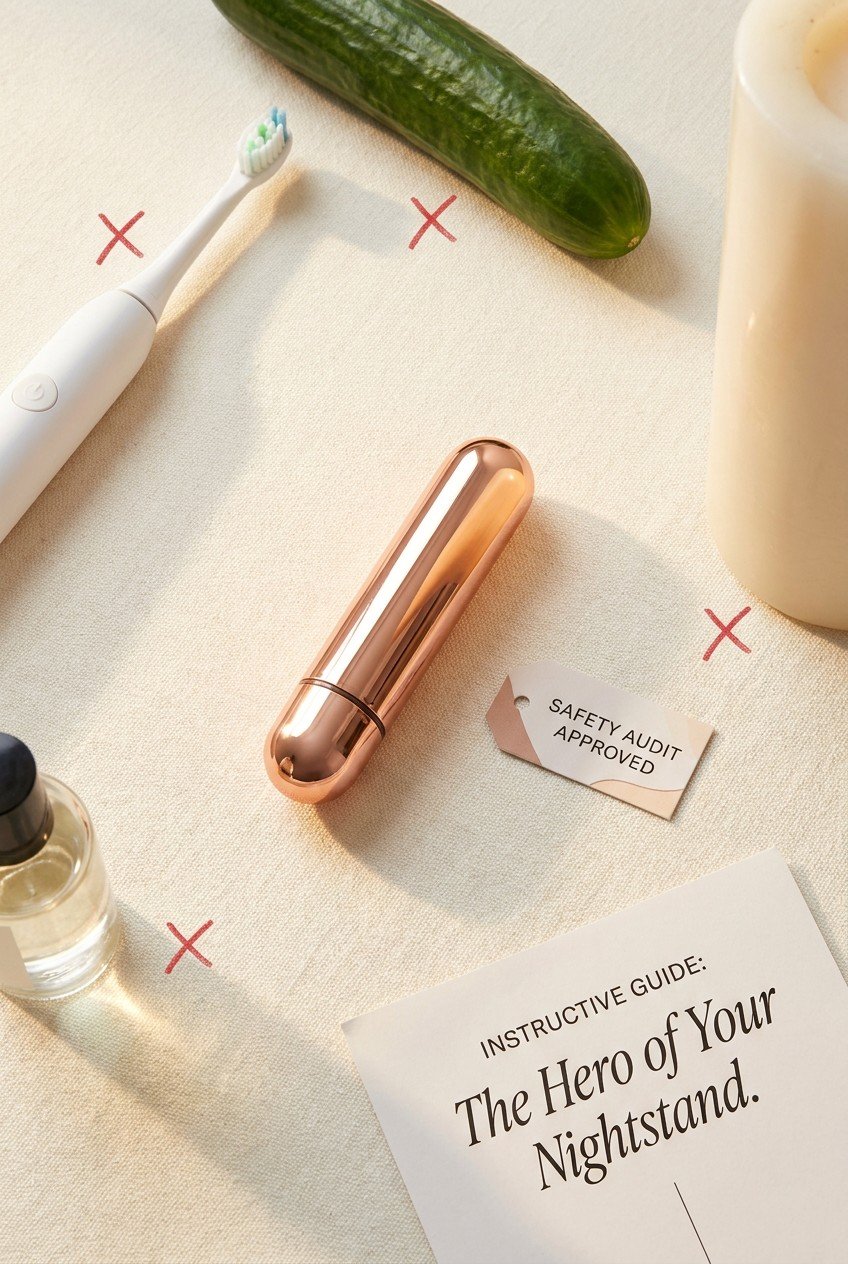
If you’ve never used a vibrator: start with a bullet on the lowest setting, against the clitoral hood, not the glans. Move slowly. Let your body acclimate to the sensation before increasing intensity.
Technique gets you 50% of the way there. Your brain does the rest.
Arousal is not on command. It emerges from a state of relaxation and safety. If you’re stressed, rushing, watching the clock, or mentally composing tomorrow’s to-do list, your body will not cooperate — not because anything is wrong, but because your nervous system is in “task” mode, not “pleasure” mode.
What to do: Set aside time where you won’t be interrupted. Put your phone in another room. Take a few deep breaths. Give yourself permission to take as long as you need, and to not orgasm if it’s not happening. The goal is exploration and pleasure, not performance. Removing the performance requirement is the single most effective psychological shift for women who struggle to orgasm.
Some women are aroused by specific fantasies, memories, or imagined scenarios. Some are aroused by physical sensation alone. Most are somewhere in between. Neither is better or more valid.
If you don’t have vivid sexual fantasies, you’re not broken. Aphantasia — the inability to form mental images — affects roughly 2–5% of the population, and many more people have weak rather than absent mental imagery. Your arousal pathway might be primarily physical rather than mental. That’s fine. Focus on what you feel, not what you should be picturing.
If you want to explore fantasy: Books, audio erotica, and written stories often work better for women than visual pornography. Women, on average, respond more strongly to narrative context, emotional dynamics, and scenario-based arousal than to purely visual stimulation. Try audio erotica apps or written stories before assuming “fantasy doesn’t work for me.”
This is the hardest concept to internalize and the most important one in this guide. Masturbation is not a task. Orgasm is not the deliverable. If you approach masturbation thinking “I need to come in the next 20 minutes,” you’ve turned pleasure into a quota.
Pleasure exists before orgasm, during orgasm, and after orgasm. The buildup, the sensation itself, the physical release, the afterglow — these are all valuable experiences, not just the last one. Some of the best sessions end without orgasm, because the goal was relaxation and pleasure, not completion.
If you’ve never orgasmed: take the goal off the table entirely. Make the next few sessions exclusively about discovering what feels good, with zero expectation of an endpoint. When orgasm stops being a requirement, it often shows up uninvited.
Most beginners try masturbating in one position (lying on their back), get mixed results, and conclude they’re doing it wrong. Different positions recruit different muscles, change blood flow, and alter the angle of stimulation.
On your back (supine): Classic. Easy. Best for manual finger stimulation and vibrator use. This is the default starting position for a reason, but it’s not the only option.
On your stomach (prone): Allows body-weight pressure and grinding. Some women find this position makes it easier to contract pelvic floor muscles rhythmically, which can intensify sensation. Good for pillow grinding and wand use.
On hands and knees: Changes the angle of internal stimulation significantly — the vaginal canal angles differently, and the G-spot area is more accessible. Good for combined internal and external stimulation.
Side-lying: Can alter blood flow to the pelvis and change how pressure lands on the clitoris. Some women find this position more relaxing because it feels less “active” than lying on their back.
Sitting up, leaning back: Allows for a combination of manual stimulation and pelvic rocking. Good for shower use.
Try at least three positions across multiple sessions before deciding what works. Your optimal position might not be the one you assumed.
First: this is common. Depending on which study you look at, between 5% and 15% of women have never experienced orgasm by any method, and a much larger percentage have difficulty reaching orgasm consistently. You are not unusual.
What to try, in order:
If none of this works: You might be part of the small percentage of women for whom orgasm is physiologically difficult or impossible with current understanding. This is a neutral fact about your body, not a failure. Many women in this category report that removing the goal of orgasm entirely allowed them to discover pleasure they’d been overlooking while fixated on a specific outcome.
Post-masturbation guilt is extremely common, especially among women raised in religious or culturally conservative environments. It’s a learned emotional response, not an indicator that you did something wrong.
What helps: Understanding, on an intellectual level, that this guilt is conditioning, not truth. The feeling will fade over time as the behavior becomes normalized through repetition. The first time you masturbate without guilt might not be the first time you masturbate. It might be the twentieth.
Some women need 30–45 minutes to orgasm. This is within the normal range. Pornography and media have created the expectation that female orgasm should take 5–10 minutes. That’s not reality. That’s editing.
What to do if time is a concern: Set aside longer sessions when you can. Don’t try to squeeze masturbation into a 10-minute window before bed. If you consistently need longer than you have available, a wand vibrator can shorten the time — the stronger, broader stimulation often reduces time to orgasm.
If manual stimulation produces minimal sensation: try a vibrator. Some clitorises simply don’t respond strongly to manual pressure at baseline — they need the higher-frequency vibration that fingers can’t produce.
If vibrators also don’t work: try an air-pulse / suction toy. The sensation is qualitatively different from vibration and some women who don’t respond to vibration at all respond strongly to suction.
If nothing produces sensation: consider whether you’re starting from low arousal. The clitoris engorges with arousal, which increases sensitivity. If you’re starting cold, you’re trying to stimulate tissue that hasn’t yet awakened. Spend 10–15 minutes on non-genital stimulation first — massage, touch, anything that relaxes and arouses you — before moving to genital stimulation.
“Is it normal to never have masturbated as an adult?”
Yes. Some women discover masturbation in their 20s, 30s, 40s, or later. There is no deadline. Starting later doesn’t mean something is wrong — it means you’re starting now, which is the only moment that matters.
“How often is normal?”
There is no normal. Some women masturbate multiple times a day. Some once a month. Some never. Frequency varies with hormones, stress, relationship status, and personal preference. The only “normal” is what feels right to you.
“Will masturbating affect my ability to orgasm with a partner?”
No. The opposite is usually true — women who masturbate learn what their bodies respond to, which makes partnered sex more satisfying because they can communicate their preferences. See our myths article for the evidence.
“What if I prefer porn or erotica to ‘just using my imagination’?”
Then use porn or erotica. There is no purity test for masturbation. External stimulation — visual, auditory, written — is a tool, not a crutch. Use whatever helps your brain engage.
“Can I use household items?”
No. Objects not designed for sexual use can have sharp edges, porous surfaces, chemical residues, or shapes that can get lost or stuck. The emergency room stories are not urban legends. Buy a purpose-made toy or use your hands. Read our materials guide for details on what’s body-safe.
“Is it okay to masturbate on my period?”
Yes. Orgasm releases endorphins that can relieve menstrual cramps, and the increased blood flow to the pelvis during your period can heighten sensitivity for some women. Use a towel if you’re concerned about mess. Or masturbate in the shower. Both work.
You were probably never taught how to do this. That wasn’t an accident — it was a cultural decision, made before you were born, that female pleasure wasn’t worth teaching. You’ve been filling in the gaps ever since, with whatever information you could find.
I can’t undo that decision. What I can tell you is that the gaps are fillable. The clitoris is a real, mapped, well-understood organ with 8,000 nerve endings and one job. Your body knows how to respond to stimulation — it just needs you to stop treating orgasm like a performance metric and start treating it like an exploration.
Take your time. Change positions. Try vibration if fingers aren’t enough. Remove the goal and focus on what feels good. If you need a vibrator, use a vibrator. If you need lube, use lube. If you need 45 minutes, take 45 minutes. There is no right way to do this except the way that works for you.
You’re learning something you should have been taught a long time ago. That takes courage. It also takes patience. Give yourself both.
Ready to start? Browse our vibrators collection — everything body-safe, everything shipped discreetly, everything designed by people who believe sexual pleasure is a skill worth teaching.
About the Author:
Maya Chen is a product reviewer and pleasure writer at AmorSerere. She learned about masturbation from the internet, trial and error, and a series of vibrators purchased with escalating confidence. She writes for the person she was at 16 — curious, uninformed, and absolutely certain she was the only one who didn’t have this figured out.
Last Updated: July 15, 2026

Real-world product reviewer and sexual wellness advocate. Tests every toy personally so you don’t have to guess