




The first vibrator I ever bought came from a pharmacy. I’d walked past the “personal massager” section six times in the previous month, circling it like a nervous shark. When I finally grabbed one — a cheap, battery-powered bullet in a plastic clamshell — I paid in cash, refused the receipt, and walked out of the store with my hand clamped around the bag like it contained a live grenade.
That bullet lasted about three weeks before the motor burned out. But it did its job: it proved that I liked vibration. Seven years and roughly forty toys later, I can tell you exactly which ones are worth your money and which ones are a waste of your anxiety.
Here’s what nobody tells you about buying your first vibrator: the purchase itself is the hardest part. The shame, the indecision, the feeling that you’re doing something illicit — that’s the real barrier. The silicone is secondary. Once you cross that first threshold, the rest is just shopping.
This guide assumes you’ve never done this before. Every term is explained. Every type is described in plain language. Every recommendation comes with a price and a justification. No affiliate links. No “top ten” list that’s really just ten Amazon listings. Just honest information from someone who remembers exactly how terrifying that first pharmacy purchase was.
Before you buy anything, understand the categories. Most beginners buy the wrong type because they don’t know what the options actually do.
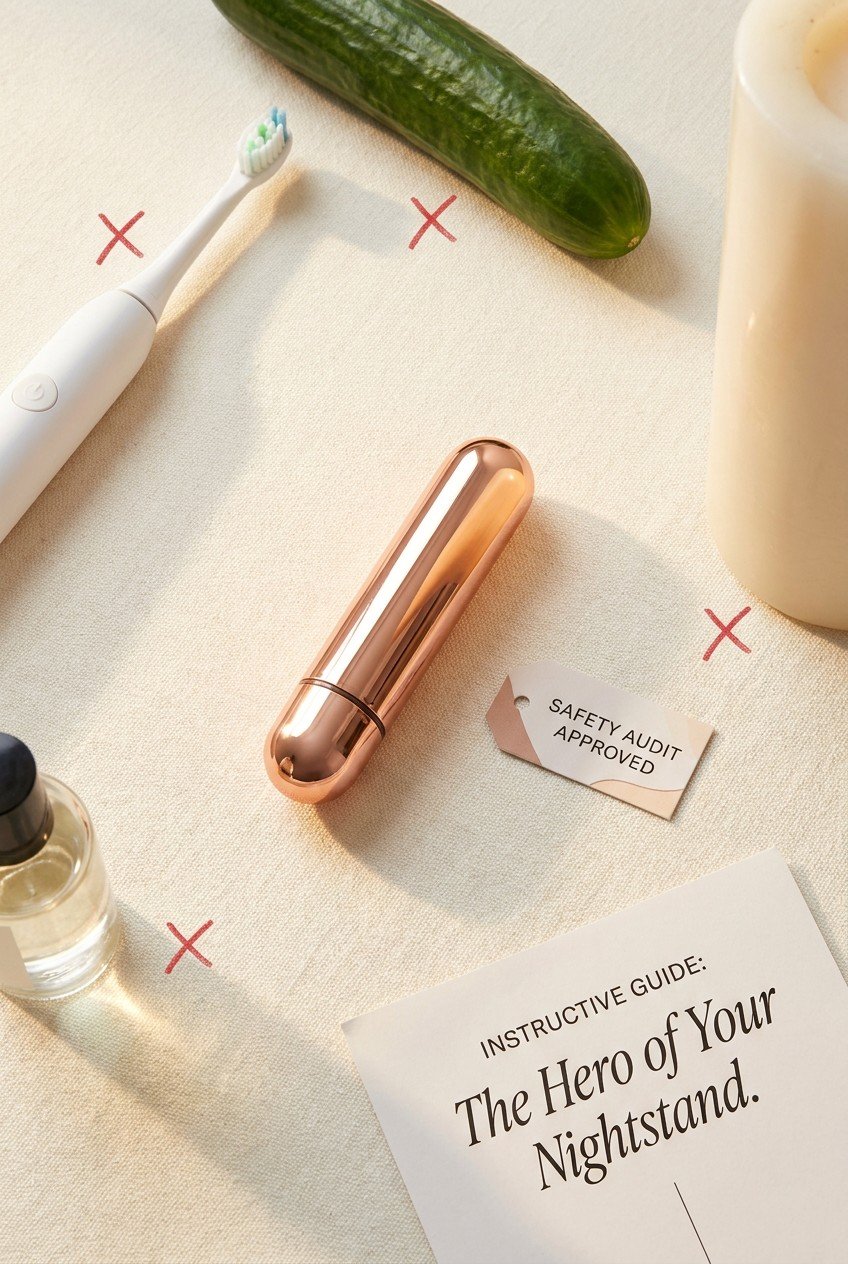
What it is: A small, lipstick-sized vibrator designed for external use. Usually cylindrical with a pointed or rounded tip. Battery-powered or USB rechargeable. Often comes with interchangeable silicone sleeves.
What it does: Direct, pinpoint clitoral stimulation. This is not an internal toy. You hold it against your clitoris, your nipples, or anywhere external that responds to vibration.
Why it’s the best choice for most beginners: It’s unintimidating, affordable, easy to hide, and terrible at being anything other than what it is — which means you won’t accidentally buy a bullet that doesn’t work for its intended purpose. Bullets do one thing and they do it well.
What to look for: Medical-grade silicone sleeve, multiple speed settings (not just on/off), USB rechargeable (better motor life than battery). Avoid metal bullets as a first purchase — they conduct vibration too efficiently and feel harsh on sensitive areas.
Price you should pay: 25–45foraqualityUSBrechargeablebullet.Below20, expect a buzzy motor that fails within months. Above $50, you’re paying for packaging and brand, not performance.
What it is: The traditional tube-shaped vibrator. Straight or slightly curved. 5–8 inches long. Designed for both external and internal use.
What it does: External clitoral stimulation using the tip or side. Internal vaginal stimulation — but the straight shape is not optimized for G-spot contact the way a curved toy is. Think of this as a versatile generalist. Good at many things. Specialized at none.
Why you might choose it: You want something that can do both internal and external, or you’re not sure which you’ll prefer. The familiar shape is psychologically less intimidating than a rabbit or a wand.
What to look for: Silicone surface, curved tip (slight upward bend), multiple vibration patterns, IPX7 waterproofing. Avoid textures marketed as “realistic” — those are usually TPE, not silicone.
Price you should pay: $35–60 for a quality classic vibrator. The sweet spot is narrower than bullets because the motor needs to drive a larger surface area, and cheap motors in large toys feel buzzy and unsatisfying.
What it is: A vibrator with a dual structure — an internal shaft and external “ears” or stimulator. The classic rabbit ears sit against the clitoris while the shaft is inserted.
What it does: Simultaneous internal (G-spot) and external (clitoral) stimulation. The ears vibrate against the clitoris while the shaft presses against the front vaginal wall.
Should this be your first vibrator? Probably not. Rabbits require precise fit — the distance between the ears and the shaft must match your anatomy, and there’s no way to know without trying. An ill-fitting rabbit is a $70 paperweight. Get comfortable with a bullet or classic vibrator first. Learn what you like. Then upgrade to a rabbit if simultaneous stimulation appeals to you.
Read more: The Complete Rabbit Vibrator Guide
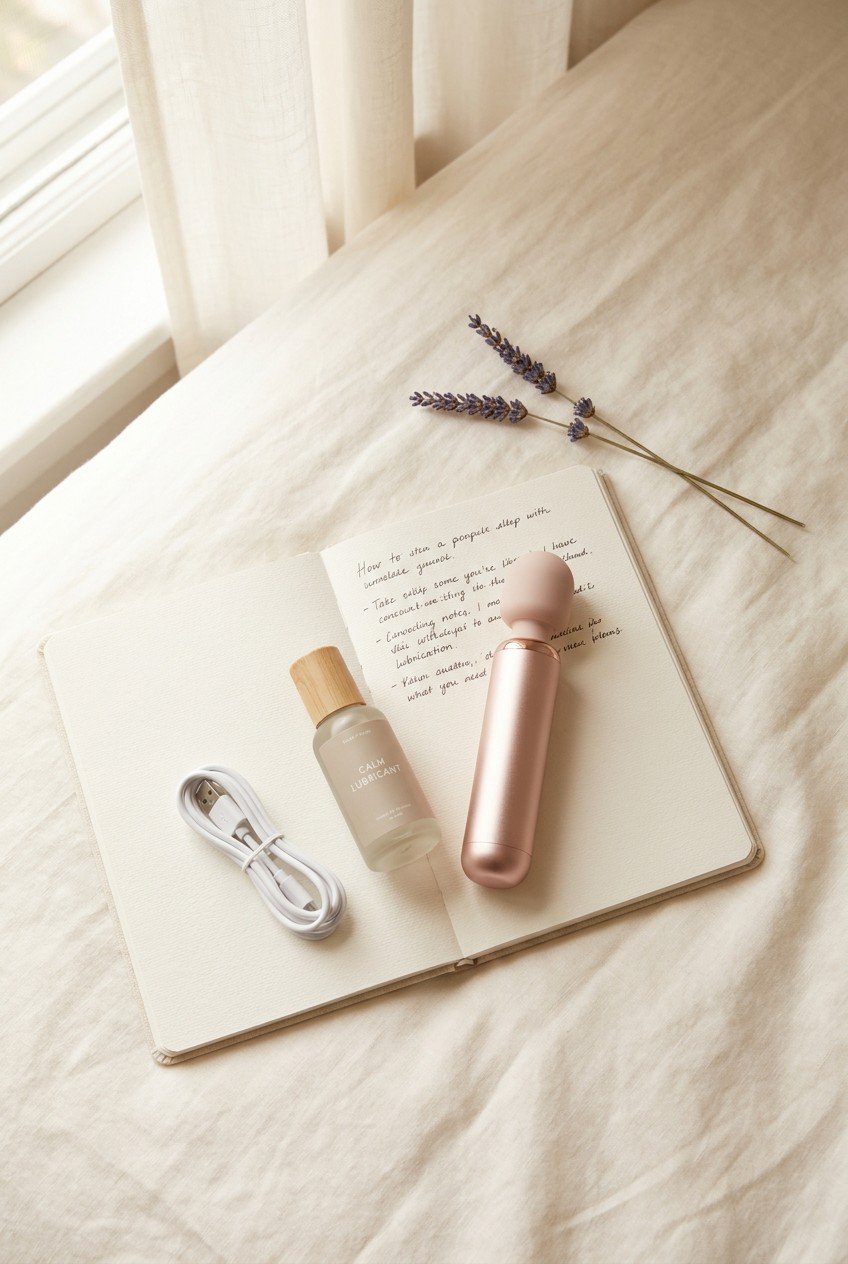
What it is: A large, powerful vibrator with a broad, rounded head connected to a handle by a flexible neck. Originally marketed as body massagers, which is why they don’t look like traditional sex toys.
What it does: Deep, rumbling, broad-spectrum vibration. The large head spreads stimulation across the entire vulva rather than a single point. Significantly more powerful than any other vibrator type.
Should this be your first vibrator? Only if you already know you need strong stimulation and diffuse (broad, not pinpoint) sensation. Wands are overwhelming for a lot of beginners — the lowest setting on a quality wand is stronger than the highest setting on most bullets. If you’ve never used a vibrator, start with a bullet. If the bullet isn’t strong enough, upgrade to a mini wand, not a full-size.
What it is: A newer category that uses air pulses rather than mechanical vibration. A small silicone nozzle fits over the clitoris. Rapid air pressure changes create a sucking, tapping, or pulsing sensation.
What it does: Indirect clitoral stimulation that feels different from vibration — described by users as a deeper, more organic pulsing rather than a surface-level buzz. For many women, these are easier to orgasm with than traditional vibrators.
Should this be your first vibrator? Potentially, if you’re sensitive to vibration or find buzzing sounds irritating. Air-pulse toys are quieter and gentler on the surface. The learning curve is different — the nozzle needs to form a seal around the clitoris — but once positioned correctly, they’re more forgiving of movement than pinpoint bullets.
| You should buy a… | If… |
|---|---|
| Bullet | You want the simplest, cheapest, least intimidating entry point |
| Classic vibrator | You want one toy that does everything reasonably well |
| Rabbit | You’ve used other vibrators and want internal + external at once |
| Wand | Bullet isn’t strong enough — you need more power and broader sensation |
| Air-pulse toy | You don’t like buzzing sensations or you want a gentler, organic feel |
At this price, you’re getting a bullet — and it should be silicone and USB rechargeable. Battery-powered bullets under $15 exist, but the motors are weak, the batteries die mid-session, and the plastic casing develops hairline cracks within weeks.
What’s realistic: A simple silicone bullet with 3–5 vibration speeds. No patterns. No waterproofing above IPX6. No travel lock. Enough to find out if you like vibration.
What to avoid: Anything with a cord, a wall plug, or “jelly” material. Cheap classic vibrators in this range are universally terrible — buzzing, loud, and made of mystery rubber that smells like a new shower curtain.
This is where most first-time buyers should land. You’re getting a quality bullet with 5–10 patterns, or a solid classic vibrator with a rechargeable battery and genuine silicone. The motors in this range are strong enough to actually feel satisfying, not just buzzy. Waterproofing hits IPX7. You get a storage pouch and a charging cable that doesn’t feel like it came from a gas station.
**The 50sweetspot:∗∗Ifyoubuyexactlyonevibratorever,50 is the price-performance peak. The jump from 20to50 is enormous — better motor, real silicone, waterproofing, charging indicator, multiple speeds. The jump from 50to100 is smaller. Start at $50 and go up only if you have a specific reason.
At this tier, you’re getting specialty features: more patterns, app connectivity, memory settings, travel locks, silent charging cases. The core physical experience doesn’t change dramatically from the 50tier—a90 bullet vibrates similarly to a $50 bullet. What you’re buying is the ecosystem: build quality, packaging, warranty, brand trust.
Spend here if: You want something that feels premium as an object. You plan to use it for years. You care about app-controlled patterns or long-distance partner play. You want a wand and need the motor quality that cheaper wands can’t deliver.
Your first vibrator has arrived. You’re alone. You’ve charged it. Now what?
Take the toy out of the box. Feel the silicone — it should be smooth, not sticky or tacky. Plug in the charger and confirm it charges. Run it through the settings while holding it in your hand — learn where the buttons are and what each pattern feels like against your palm. This step removes the “how do I turn this thing on” fumbling that kills arousal later.
Apply lubricant to the part of the toy that will contact your body. Even a bullet. Even if you think you don’t need it. Silicone on dry skin creates friction. Friction feels scratchy, not pleasurable. A single drop of water-based lube on the tip of a bullet makes it glide instead of drag.
If you don’t own lubricant, buy it when you buy the toy. Do not use lotion, coconut oil, Vaseline, or saliva as substitutes. Lotion has fragrance that irritates mucous membranes. Oil degrades latex and some silicone blends. Saliva dries immediately and contains bacteria that can cause infection. (For everything you need to know about choosing the right lube, see our complete lube guide. For which materials to pair with which lubricants, check our body-safe materials guide.)
Do not insert anything on your first try. Place the vibrator against your clitoris — not directly on the most sensitive spot, but on the hood or slightly to the side. Turn it to the lowest setting.
Many beginners make the mistake of going straight to the most sensitive spot on the highest setting. This feels overwhelming, not pleasurable — like blasting a cold shower on sunburned skin. Start gentle. Move slowly. Your body will tell you when it wants more.
Don’t hold the vibrator in one spot. Move it in small circles. Press slightly harder, then lighter. Shift it up, down, left, right. The clitoris has areas of higher and lower sensitivity, and they vary from person to person. You’re mapping your own anatomy, not following a diagram. Take your time.
The clitoris is larger than the visible nub. The internal branches extend down both sides of the vulva. Running the vibrator along the outer labia, the inner thighs, and the mons pubis can activate different nerve pathways. Some women find indirect stimulation more pleasurable than direct — the vibration transmits through the surrounding tissue rather than landing directly on the most sensitive point.
Your first session with a vibrator doesn’t need to end in orgasm. If it happens, great. If it doesn’t, great. The goal is learning what your body responds to — which vibration speed, which pressure, which location. Treat session one as research. Session two through infinity will benefit from what you learned.
The mistake: buying a vibrator, using it exactly once, not orgasming, concluding “vibrators don’t work for me,” and putting it in a drawer forever.
Why this happens: your body has never experienced vibration as a sexual stimulus before. Your nerves don’t know what to do with it. The sensation feels confusing — not bad, necessarily, but not obviously pleasurable. Your brain is processing a new input and hasn’t built the neural pathway that converts “vibration” into “pleasure.”
This is normal. It’s not failure. It’s learning.
The fix: Use the vibrator three times before you make any judgment. First session: explore, no pressure to orgasm, just learn what it feels like. Second session: you know the settings now, your body recognizes the sensation, your brain starts converting it. Third session: the pathway is open. Most women who “don’t like vibrators” stopped after session one.
If after three sessions you genuinely don’t enjoy it, you might be someone who prefers pressure to vibration, or suction to buzzing. That’s useful information. Try a non-vibrating toy (glass dildo, grinding toy) or an air-pulse toy instead. There is no universal sensor — your preferences are valid even if they don’t match the bestseller list.
“How do I hide the package when it arrives?”
Buy from retailers that ship in plain brown boxes with neutral return addresses. AmorSerere ships in unbranded packaging — the box says nothing about what’s inside. If you live with people who might open your mail, have the package delivered to a pickup point, an Amazon locker, or your workplace (if appropriate and allowed).
“Can I return it if I don’t like it?”
Most retailers do not accept returns on opened sex toys for hygiene reasons. This is why you should read return policies before purchasing, and why you should start with a moderate investment — 30–50—ratherthanrisk150 on something you can’t return. Some premium brands offer satisfaction guarantees; check before buying.
“How do I charge it without anyone seeing?”
Charge in your bedroom with the door closed. Most vibrators take 1–2 hours for a full charge. If you share a room, charge it in a drawer with the cable running out — or use a power bank so the toy isn’t visibly plugged into the wall.
“Will a vibrator make me unable to orgasm without one?”
No. This is addressed in detail in our myths article. The short answer: vibrators don’t cause desensitization. They create a learned preference for a specific type of stimulation. If you want to maintain manual orgasms, alternate between vibrator sessions and manual sessions.
“What if I’m not even sure what I like yet?”
Buy a bullet. It’s the cheapest, simplest, most versatile entry point. You can use it externally on your clitoris, your nipples, your partner’s body, anywhere that responds to vibration. If you love it, you’ve found your thing. If you want more, you now know you like vibration — upgrade to a classic, a rabbit, or a wand. If you don’t love it, you’ve spent $30 to learn a permanent piece of information about your preferences.
“Is it weird that I’m nervous about buying a sex toy?”
No. Nearly everyone is nervous the first time. The nerves are a product of cultural stigma, not personal inadequacy. Most people who own vibrators now were nervous about their first purchase. The anxiety goes away after the first successful purchase — once you realize the world didn’t end and the mail carrier didn’t judge you and the toy actually feels good. The second purchase is shopping. The first purchase is courage.
Your first vibrator is not a lifelong commitment. It’s a diagnostic tool with a motor in it. It tells you whether you like vibration, what kind of vibration you like, and what part of your body responds best to it. That information is worth the price whether or not this specific toy becomes your favorite.
Buy a $30–50 bullet. Use it three times before forming an opinion. Apply lube. Start low. Don’t demand an orgasm on the first date. You’re not buying a vibrator. You’re learning about a part of your body you’ve never had a tool for. That’s research. Research takes patience.
And if anyone makes you feel weird about this purchase — remember that the vibrator was invented by doctors in the 19th century, that millions of people own them, and that you walked past that pharmacy six times before buying one. You’ve already done the hard part. The rest is just pressing a button.
Ready? Browse our beginner-friendly vibrator collection — every product body-safe, every package discreet, every order shipped in an unmarked brown box. Or start small with our bullets & compact vibrators. No judgment. No marketing fluff. Just tools that work.
About the Author:
Maya Chen is a product reviewer at AmorSerere. Her first vibrator was a 15pharmacybulletthatdiedinthreeweeks.Hersecondwasa40 USB rechargeable that lasted two years. She’s now tested over 40 toys across every category, and she still recommends bullets to beginners — not because they’re the best, but because they’re the best place to start.
Last Updated: July 14, 2026

Real-world product reviewer and sexual wellness advocate. Tests every toy personally so you don’t have to guess