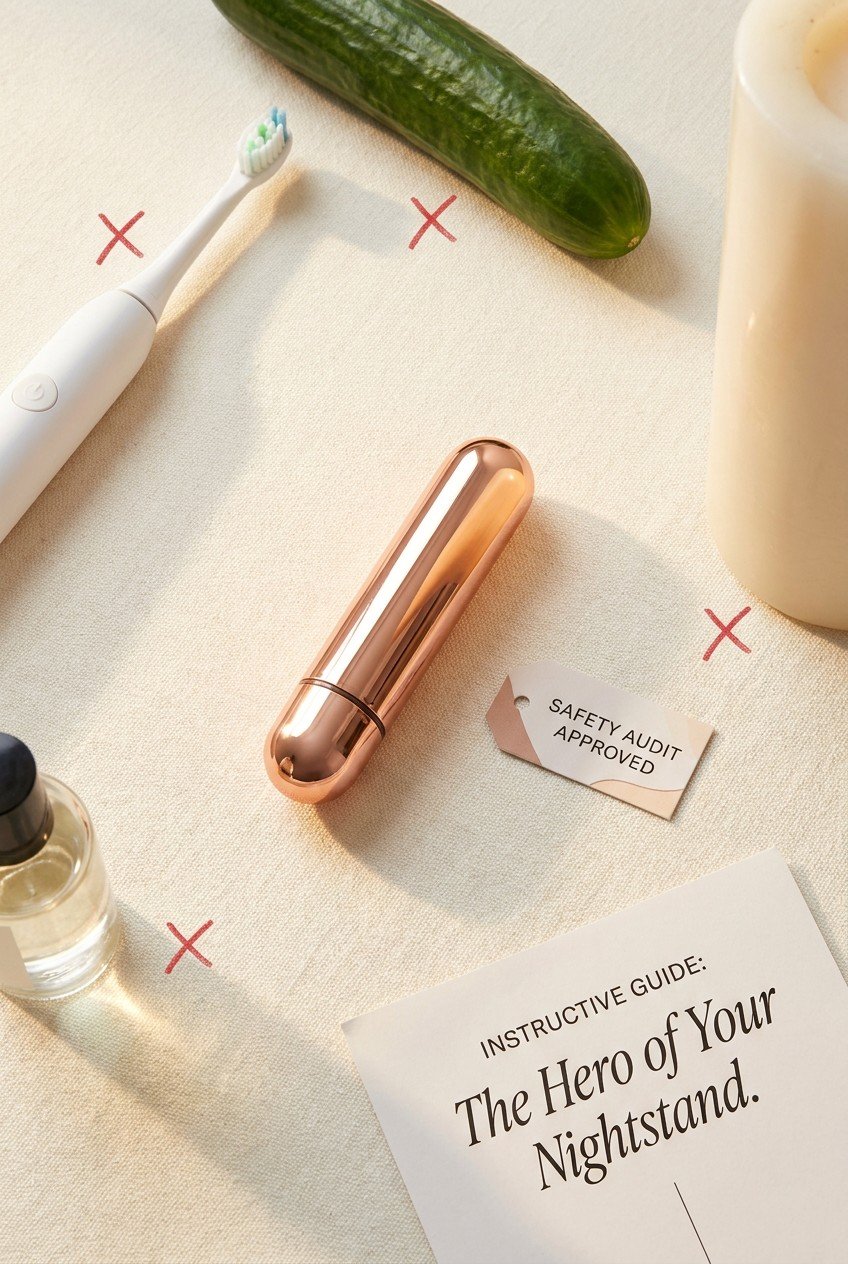
Here’s an uncomfortable fact: the sex toy industry is largely unregulated.
In the United States, adult toys are legally classified as “novelty items.” That means manufacturers aren’t required to disclose materials, meet safety standards, or prove their products are non-toxic. The FDA doesn’t test vibrators. There’s no mandatory certification for “body-safe.”
So when a box says “100% silicone,” it might not be. When a product is labeled “phthalate-free,” the replacement plasticizer could be just as questionable.
This guide is your bullshit detector. We’ll break down every major sex toy material, explain how to verify what you’re actually buying, and give you a simple framework for choosing products you can trust.
The Regulation Problem (Why This Guide Exists)
Before we get into materials, understand the landscape:
EU: REACH regulation restricts phthalates in consumer goods. But enforcement is spotty.
US: No federal safety standards for sex toys. The CPSC can act if a toy causes injury, but there’s no pre-market testing.
Japan: Medical device classification applies to some products, but most toys fall through gaps.
Australia: Therapeutic Goods Administration regulates products claiming therapeutic benefits, but “massagers” are unregulated.
Translation: the brand’s word is all you’ve got. So you need to know what you’re looking at.
Material 1: Silicone — The Gold Standard
What It Is
Medical-grade silicone is a platinum-cured polymer. It’s chemically inert — meaning your body doesn’t react to it, absorb anything from it, or break it down.
Why It’s the Best
Non-porous. Bacteria can’t seep in. This is the single most important property for an insertable toy.
Temperature-stable. Can be boiled, bleached (10% solution), or run through the dishwasher (top rack, no detergent).
Soft but firm. Has a natural give that mimics skin, but keeps its shape.
Odorless. Silicone doesn’t off-gas or retain smells — if your toy has a chemical smell, it’s probably not pure silicone.
How to Spot Fake Silicone
The market is flooded with “silicone blend” toys — a mix of silicone and TPE, or silicone and PVC. These degrade faster, can harbor bacteria, and the manufacturer gets away with saying “silicone” on the label.
The Flame Test (do this on a small area, like the base):
Real silicone: white ash, minimal smoke, no dripping.
Fake silicone: black smoke, melting, chemical smell.
The Rub Test:
Rub the toy firmly with your finger for 30 seconds. Real silicone feels smooth and doesn’t release residue. Fake silicone or TPE gets “draggy” and may leave a chalky film on your hand.
The Price Test:
A full-size, medical-grade silicone vibrator from a reputable manufacturer costs at minimum $35–45. If you see a “silicone rabbit vibrator” for $15 on Amazon, it’s not silicone. The raw material alone costs more than that.
Verdict
✅ Safe for all types of play. Buy silicone whenever possible.
Material 2: TPE / TPR — The Budget Alternative
What It Is
Thermoplastic elastomer (TPE) and thermoplastic rubber (TPR) are blends of plastic and rubber. They’re soft, squishy, and significantly cheaper than silicone.
The Pros
Very soft. TPE can feel more “flesh-like” than silicone.
Affordable. A TPE toy might cost $15–25 vs $50+ for silicone.
Common in masturbators. Almost all male masturbators (Fleshlights, pocket pussies) are TPE — silicone is too firm for that category’s intended texture.
The Cons (Significant)
Porous. TPE has microscopic pores that trap bacteria, lube, and bodily fluids. You can clean the surface, but you can never fully sterilize it.
Degrades over time. TPE toys typically last 6–18 months before becoming sticky, discolored, or developing surface cracks.
Can contain phthalates. Not all TPE does, but cheap imports rarely specify. Phthalates are endocrine disruptors linked to reproductive harm.
Requires cornstarch. After washing and drying, you should dust a TPE toy with cornstarch to prevent it from turning tacky.
Verdict
⚠️ Acceptable for external use (male masturbators) if replaced every 12 months. Not recommended for internal use — the porosity risk isn’t worth the savings. For insertable toys, pay the extra for silicone.
Material 3: ABS Plastic — The Hard Shell
What It Is
Acrylonitrile butadiene styrene (ABS) is the same hard plastic used in LEGO bricks and medical devices. Most vibrator bodies use an ABS core or handle.
The Pros
Non-porous. Like silicone, ABS can be fully sterilized.
Body-safe. Medical-grade ABS is inert and hypoallergenic.
Sturdy. Won’t degrade, warp, or soften over time.
Great for pressure play. Hard toys transmit vibration efficiently and work well for targeted G-spot or P-spot pressure.
The Cons
No give. Hard = unforgiving. Not the choice for a gentle warm-up.
Can be cold. ABS absorbs room temperature. Run it under warm water first.
Seam quality matters. Cheap ABS toys sometimes have sharp mold seams that can scratch delicate tissue. Run your finger over every seam before first use.
Verdict
✅ Safe. Many high-quality vibrators use an ABS body with a silicone sleeve. The combination gives you power transmission (ABS) plus comfort (silicone).
Material 4: Glass — The Luxury Wildcard
What It Is
Borosilicate glass (Pyrex-type) that’s been annealed — slowly cooled to eliminate internal stress. Not the same as window glass.
The Pros
Ultra-hygienic. Glass is the easiest material to sterilize. Boil it. Bleach it. Autoclave it. Nothing survives.
Temperature play. Run under hot water or chill in ice for sensory contrast.
Lifetime durability. Won’t degrade. Ever.
Firm pressure. Glass transmits G-spot or P-spot pressure with zero loss.
The Cons
Weight. Glass toys are heavier than silicone — your wrist may fatigue during use.
Risk of breakage. Quality borosilicate glass is extremely durable, but if dropped on tile, it can chip or shatter. Inspect before every use.
No vibration. Glass is a static toy. Some users prefer the added stimulation of a motor.
How to Spot Safe Glass
Borosilicate only. Soda-lime glass (ordinary glass) is cheaper and more prone to thermal shock.
Annealed, not just “hardened.” Annealing is a specific cooling process. Brands that advertise “laboratory-grade borosilicate” are usually legitimate.
No internal bubbles or cloudiness. Both indicate poor manufacturing.
Verdict
✅ Safe, but buy from brands that specifically say “borosilicate” — not just “glass.”
Material 5: Metal — Stainless Steel & Aluminum
What It Is
Surgical-grade stainless steel (316 or 316L) or anodized aluminum. Used in high-end G-spot wands, butt plugs, and cock rings.
Indestructible. A stainless steel toy will outlive you.
Weighted feel. The heft of metal provides a different sensation than plastic or silicone.
Temperature play. Like glass, metal holds temperature beautifully.
The Cons
Price. Surgical-grade stainless toys start around $60 and go to $200+.
Weight. Heavier than any other material. Can be fatiguing.
No flexibility. Zero give. Be precise with angles.
Fake “stainless steel.” Cheap metal toys are often chrome-plated zinc or mystery alloys that can contain nickel (a common allergen) or lead.
How to Verify
Magnet test. High-quality 316 stainless is non-magnetic (or very weakly magnetic). If a magnet sticks hard, it’s likely a lower grade with more iron.
Weight. Stainless steel feels unexpectedly heavy for its size.
Brand reputation. Njoy, Le Wand, and similar premium makers provide material certifications.
Verdict
✅ Safe from reputable brands with documented material grades. Avoid no-name metal toys.
Materials to Avoid Completely
Material
The Problem
PVC
Contains phthalates in most formulations. Porous. Off-gasses chemical smell. Never buy.
Jelly / Rubber
Mystery blend of who-knows-what. Very porous. Chemical smell. Phthalates almost guaranteed.
“Realistic feel” / “Softskin” / “Cyberskin”
Marketing terms for TPE blends. Not necessarily dangerous, but porous and temporary. Replace frequently.
Unknown “silicone blend”
Usually means TPE with a silicone coating — the coating wears off, exposing porous material underneath.
How to Apply This When Shopping
Read the Description Like a Detective
“Made with silicone” ≠ 100% silicone. Could be a 10% blend. Look for “100% platinum-cure silicone” or “medical-grade silicone.”
“Phthalate-free” is good, but what did they replace the phthalates with? This claim alone isn’t enough.
“Body-safe” is a marketing term with no legal definition. Ignore it and check the actual material.
The Price Floor
Toy Type
Minimum for Real Silicone
Bullet vibrator
$25–30
G-spot vibrator
$45–60
Rabbit / dual-stim
$55–80
Dildo (non-vibrating)
$35–50
Butt plug set
$30–40
If it’s significantly cheaper, the material claim is questionable.
FAQ
Do I really need to worry about phthalates?
If you’re buying from a reputable brand, probably not. If you’re buying a $12 vibrator from a random Amazon seller with 15 reviews and broken English in the listing — yes, you should worry. Phthalates have been linked to hormone disruption, reproductive issues, and in animal studies, developmental abnormalities. The risk is cumulative exposure over time, not a single use.
Can silicone toys be used with silicone lube?
No. The chemical structure of silicone lube can bond with silicone toys, creating a permanently tacky or degraded surface. Use water-based or hybrid lube with silicone toys — our complete lube guide explains exactly which type to pair with each material.
How do I clean silicone vs TPE toys?
Silicone: Soap and warm water for routine cleaning. Boil for 5–10 minutes or use a 10% bleach solution for deep sterilization. TPE: Soap and warm water only. Never boil (it will melt). Never bleach (it will degrade the material). Dust with cornstarch after drying.
Is “medical-grade silicone” just marketing?
No — there’s a real distinction. Medical-grade silicone meets USP Class VI or ISO 10993 standards for biocompatibility. It’s the same material used in catheters and implants. “Food-grade” silicone is a step down. “Silicone” with no qualifier could be anything.
What material should I choose for my first toy?
100% platinum-cure silicone. It’s the safest, easiest to clean, and most versatile material. Start with our beginner’s guide for help choosing a specific type of toy, then come back here when you’re ready to evaluate materials.
Can I sterilize all my toys the same way?
No. The method depends entirely on the material — read our cleaning guide for step-by-step instructions by material type.
Can old sex toys be recycled?
Generally, no. The mix of plastics, electronics, and silicone isn’t accepted by municipal recycling. Some specialty programs exist — check with your local sex-positive community center or mail-back programs. When throwing away a toy, remove any batteries first.
The Bottom Line
The sex toy industry won’t protect you. You have to protect yourself.
Buy silicone when you can afford it. Never put anything made of jelly, rubber, or mystery “softskin” inside your body. Read material labels with the same skepticism you’d bring to a used car listing.
Your body deserves better than a $10 impulse buy from a gas station.
Reviewed by Dr. Yuki Tanaka, Sexual Health Education Editor. All material safety claims verified against published toxicology research and manufacturer datasheets.
Contains information related to marketing campaigns of the user. These are shared with Google AdWords / Google Ads when the Google Ads and Google Analytics accounts are linked together.
90 days
__utma
ID used to identify users and sessions
2 years after last activity
__utmt
Used to monitor number of Google Analytics server requests
10 minutes
__utmb
Used to distinguish new sessions and visits. This cookie is set when the GA.js javascript library is loaded and there is no existing __utmb cookie. The cookie is updated every time data is sent to the Google Analytics server.
30 minutes after last activity
__utmc
Used only with old Urchin versions of Google Analytics and not with GA.js. Was used to distinguish between new sessions and visits at the end of a session.
End of session (browser)
__utmz
Contains information about the traffic source or campaign that directed user to the website. The cookie is set when the GA.js javascript is loaded and updated when data is sent to the Google Anaytics server
6 months after last activity
__utmv
Contains custom information set by the web developer via the _setCustomVar method in Google Analytics. This cookie is updated every time new data is sent to the Google Analytics server.
2 years after last activity
__utmx
Used to determine whether a user is included in an A / B or Multivariate test.
18 months
_ga
ID used to identify users
2 years
_gali
Used by Google Analytics to determine which links on a page are being clicked
30 seconds
_ga_
ID used to identify users
2 years
_gid
ID used to identify users for 24 hours after last activity
24 hours
_gat
Used to monitor number of Google Analytics server requests when using Google Tag Manager
1 minute
SourceBuster is used by WooCommerce for order attribution based on user source.
Name
Description
Duration
sbjs_session
The number of page views in this session and the current page path
30 minutes
sbjs_udata
Information about the visitor’s user agent, such as IP, the browser, and the device type
session
sbjs_first
Traffic origin information for the visitor’s first visit to your store (only applicable if the visitor returns before the session expires)
session
sbjs_current
Traffic origin information for the visitor’s current visit to your store
session
sbjs_first_add
Timestamp, referring URL, and entry page for your visitor’s first visit to your store (only applicable if the visitor returns before the session expires)
session
sbjs_current_add
Timestamp, referring URL, and entry page for your visitor’s current visit to your store
session
sbjs_migrations
Technical data to help with migrations between different versions of the tracking feature