



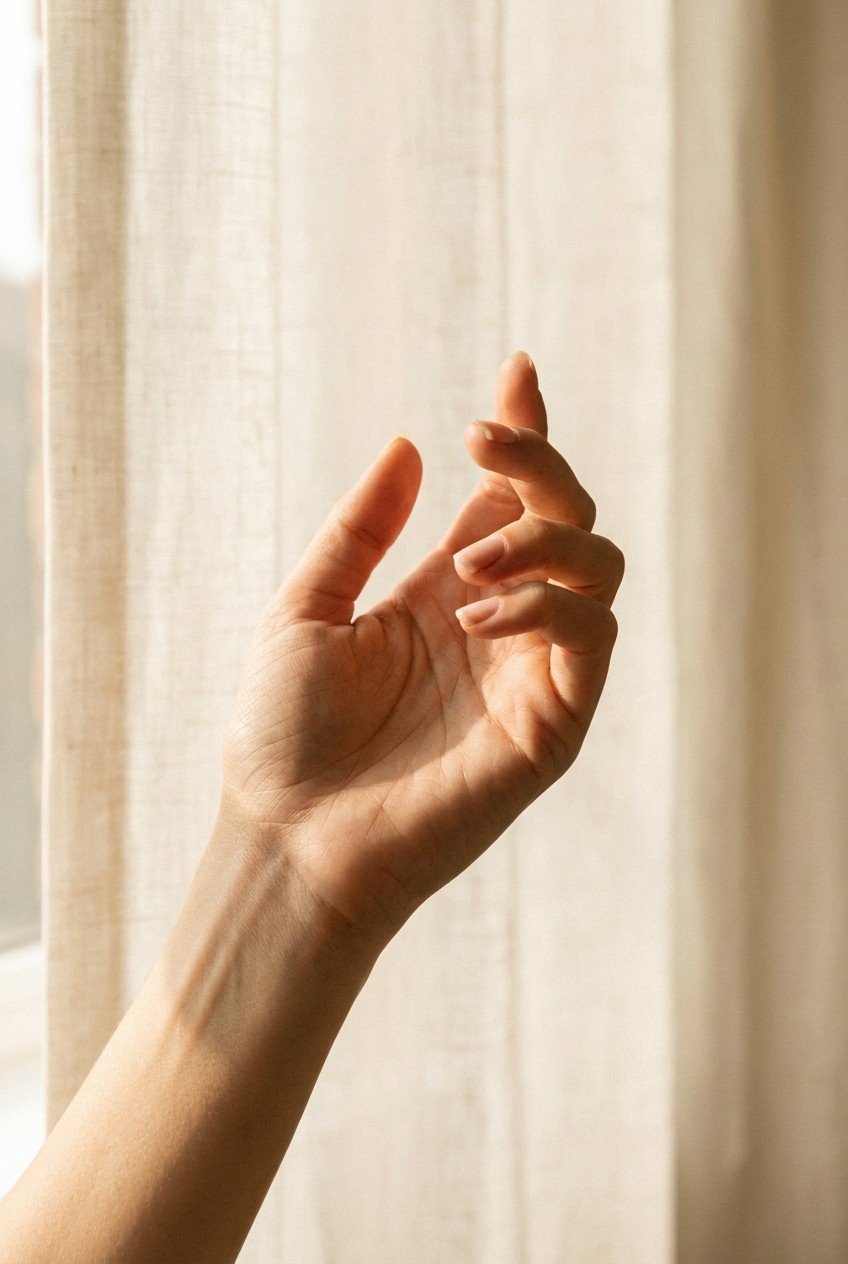
The hand is the most under-taught sexual tool in existence. We spend thousands of words on vibrator guides, oral sex techniques, and the nuances of different lubricant formulations — and almost nothing on the ten digits every human already owns.
This is strange, because fingers are objectively the most versatile sexual instrument available. They can provide pinpoint clitoral stimulation, internal G-spot pressure, and both simultaneously. They can vary pressure from feather-light to firm. They can move in circles, strokes, taps, and pulses. They never run out of battery. They’re free.
Yet most people learn fingering through trial and error — their own or a partner’s. There’s no curriculum. No standardized technique. Just “try stuff and see what happens.” The result: a lot of fingering that’s fine but not great, and a lot of people who quietly prefer vibrators not because vibration is inherently better, but because nobody ever taught them what fingers can actually do.
This guide covers external manual stimulation, internal fingering, combined techniques, and the preparation and communication that transform fingers from “adequate” to “exceptional.” Every technique is described in precise, anatomical language. Nothing is left to “you’ll figure it out.”
Your partner’s genitals are more sensitive than your fingertips. If you wouldn’t touch your own eyeball with your current nails and calluses, don’t touch someone’s vulva or vagina with them.
Trim your nails short and file them smooth. Not “neat.” Smooth. Run each fingertip along the inside of your own cheek. If you feel any edge, any roughness, any catch — file it more. The vaginal canal is lined with delicate mucosal tissue. A sharp nail edge is not erotic. It’s a micro-abrasion that hurts and increases infection risk.
Long nails — including acrylics, gels, and extensions — are incompatible with internal fingering. There is no safe technique for inserting a nail into a vagina. The nail catches on vaginal rugae (the natural ridges of the vaginal wall), creates micro-tears, and harbors bacteria regardless of how recently you washed your hands. If you prefer long nails, stick to external stimulation and use toys for internal.
Guitar calluses. Weightlifting calluses. Manual labor hands. These are badges of your life, but they’re sandpaper on a clitoris. The fix is not to stop doing what you do — it’s to use more lubricant and adjust your technique to use the pads of your fingers rather than the sides, where calluses tend to be thickest.
If your hands are consistently rough, keep a high-quality hand cream in your routine — not applied immediately before sex, but as a daily habit. Softer hands feel better on genitals. This is objectively true and not vanity.
Wash your hands with unscented soap before manual sex. Not antibacterial soap (dries the skin and leaves residue). Not scented hand wash (the fragrance transfers to genitals and can cause irritation). Plain, unscented soap. Warm water. Dry thoroughly. This is for your partner’s safety — your hands carry whatever you’ve touched since your last wash, and genitals don’t appreciate meeting those substances.
If you’ll be touching both anal and vaginal areas, wash hands or change gloves between them. Anal bacteria in the vagina causes infection. This is non-negotiable.
Nitrile or latex gloves are an option — not just for safety, but for sensation. Gloves eliminate the nail concern entirely. They create a smooth, uniform surface. They’re warmer than bare hands when lubricant is applied over them. For partners who have sensitivity concerns or a history of infections, gloved fingering can be more comfortable than bare hands.
Powder-free gloves only. The powder inside standard exam gloves is an irritant.
External stimulation is where fingers truly excel. No vibrator can match the precision and adaptability of a fingertip — if you know what to do with it.
What it is: Use the pad of your index or middle finger to trace small, consistent circles around the clitoral glans — on the hood, not directly on the glans.
Execution: Lubricated fingertip. Light pressure. Slow circles, roughly the diameter of a dime. Do not speed up because you’re excited. Do not press harder because you think intensity equals progress. Pick a rhythm and maintain it. The consistency is the technique.
Why it works: Circular motion stimulates different nerve endings in sequence — the ones at 12 o’clock, then 3 o’clock, then 6 o’clock, then 9 o’clock. No single nerve ending group gets overstimulated. Arousal builds without the sharp, overwhelming sensation that direct pressure on the glans produces.
For partners receiving this: If the circle feels too diffuse, guide your partner’s finger to a more specific spot and say “smaller circles, right here.” If it feels too intense, “softer and slower.” You’re allowed to redirect in real time.
What it is: A rhythmic vertical or horizontal stroking motion across the clitoral shaft and hood, using one or two flat fingers.
Execution: Apply lubricant. Place two fingers together, flat, against the clitoral shaft. Stroke up and down — or side to side — in a steady rhythm. The motion comes from your whole hand, not just your fingers. Your wrist stays relaxed. Your fingers stay flat. Think of stroking a small, smooth surface — not tapping, not pressing, not rubbing.
Why it works: Stroking distributes sensation across a wider area than circles. It’s the manual equivalent of oral sex — a broad, rhythmic, consistent sensation that allows arousal to build without spiking into overstimulation. For women who find pinpoint stimulation too intense, stroking is often the manual technique that finally works.
What it is: Apply firm, steady pressure to the entire clitoral mound — not the glans, but the area above it, on the pubic bone — and hold. No movement. Just pressure.
Execution: Use the heel of your hand or two flat fingers. Press firmly — more pressure than you think — into the mons pubis, just above the clitoris. The pressure transmits through the tissue to the internal clitoral branches. Hold for 10–15 seconds. Release slowly. Repeat.
Why it works: Deep pressure activates different nerve fibers than light touch — the same fibers that respond to being held, hugged, or firmly massaged. For women whose clitorises are too sensitive for direct stimulation, indirect pressure often feels better than any amount of careful touching. The internal clitoral branches receive the pressure through the pubic bone and surrounding tissue.
What it is: Place your index and middle fingers on either side of the clitoral shaft — not on the glans — and stroke upward, like you’re framing the clitoris and pulling the surrounding tissue up.
Execution: Lubricated fingers. Position them so the clitoral shaft is between them, with the fingers resting on the inner labia on either side. Stroke upward, gently pulling the hood and surrounding tissue with the motion. The clitoris itself receives indirect stimulation through the tissue movement.
Why it works: This technique stimulates the entire external clitoral structure — glans, shaft, and surrounding erectile tissue — without direct glans contact. It’s especially effective for women whose clitorises are too sensitive for direct stimulation, and for women who need broader sensation rather than pinpoint focus.
What it is: Rhythmic, rapid tapping directly on the clitoral hood using the pad of one finger.
Execution: Very light. Very fast. Think of drumming your finger on a tabletop — but gently, on lubricated skin, on the clitoral hood. Not the glans. The motion comes from your finger joint, not your wrist. Keep it light and fast rather than slow and heavy.
Why it works: Tapping creates a rapid on-off signal to the nerves that’s qualitatively different from continuous pressure. Some nervous systems respond more strongly to intermittent stimulation than continuous. If circles and strokes don’t produce results, try tapping — the sensory pathway is different.
Do not use the same technique for 20 straight minutes. The nerves habituate to a single stimulation pattern. Rotate between 2–3 techniques every 3–5 minutes. Circle → stroke → press and hold → back to circle. The rotation prevents sensory habituation and keeps arousal building.
But — once you’ve found the technique that’s clearly working, and she’s getting closer: do not change it. The “rotation rule” applies during the buildup phase. The “don’t change anything” rule applies during the peak approach phase. Learn to recognize the difference.
Internal fingering is not about thrusting. It’s about pressure on the front vaginal wall, where the internal clitoral network presses closest to the surface.
Insert one or two fingers, palm facing up. The front wall of the vagina — the side toward the belly button — is your target. About 2–3 inches inside, the texture changes. It becomes slightly ridged, spongy, or rough compared to the smooth surrounding tissue. This is the G-spot area — the internal clitoral network pressing against the vaginal wall.
What it is: Insert one or two fingers, palm up. Curl them in a “come here” gesture, pressing into the front vaginal wall with the pads of your fingertips.
Execution: Fingers inserted to the second knuckle. Curl rhythmically — press, release, press, release. Don’t pull your fingers out between curls. Keep them inserted and let the curling motion provide the stimulation. The pressure should be firm but not jabbing. Think of pressing a doorbell — firm, deliberate, then release.
This is the foundational internal technique. If you learn nothing else about internal fingering, learn the “come here” motion.
What it is: Curl your fingers against the front wall and hold — 10, 15, 20 seconds of steady pressure. No movement. Just pressure.
Execution: Find the G-spot area with the “come here” motion. Once you’ve identified the spot, curl your fingers against it and hold. Do not move. Let the pressure build. Your partner will tell you — through breathing, through sounds, through words — when to move again.
Why it works: The G-spot responds to pressure more than friction. A sustained press allows the tissue to accommodate the sensation and sensitize, whereas continuous movement can feel irritating or ticklish. For women who find the “come here” motion too much, sustained pressure is often the better approach.
What it is: Press into the front wall with curled fingers and make small circles against the G-spot area without losing contact.
Execution: Find the spot. Curl your fingers. Make small circles — imagine tracing a pea-sized circle on the vaginal wall with your fingertips. Pressure stays constant. Speed stays slow and steady. This is the internal equivalent of the external circle technique.
What it is: One hand inside, performing any of the above techniques. Other hand outside, performing external clitoral stimulation. Simultaneously.
Execution: This requires coordination. Practice each hand’s technique separately before attempting both at once. Internal hand: steady “come here” or sustained press. External hand: circles or strokes on the clitoral hood. The two rhythms don’t need to match. Let each hand find its own pace.
Why it works: This activates the entire clitoral network — external glans and internal bulbs — simultaneously. For most women, this is the most reliable manual route to orgasm. One pathway alone might work. Both pathways together almost certainly will.
Start with one. Always. The vaginal opening needs time to relax, and one finger allows you to find the G-spot area with precision before adding more.
Move to two after 5–10 minutes if your partner wants more fullness or broader pressure. Two fingers side by side allow you to press across a wider area of the front wall.
Three or more fingers are rarely necessary for stimulation purposes and are more about the sensation of fullness, which some women enjoy and others find uncomfortable. Ask before adding a third finger.
Do not thrust like a piston. The pornographic speed-fingering technique — rapid in-and-out motion — stimulates the vaginal opening but bypasses the G-spot entirely. Your fingers spend most of their time in the lower vaginal canal, where there are fewer nerve endings.
Stay deep. Keep your fingers inserted to at least the second knuckle. The stimulation happens at the front wall, 2–3 inches inside. Shallow in-and-out movement misses this structure.
Slow down. The most common internal fingering mistake is going too fast. The G-spot needs consistent pressure over time, not rapid friction. A slow, deliberate “come here” motion once every 1–2 seconds is far more effective than a fast, shallow flutter.
Anal fingering requires specific safety considerations beyond the scope of a general manual technique guide. The essentials:
Your partner’s verbal and non-verbal cues are your navigation system. Watch and listen for:
Positive signs: Deepened breathing, hip movement toward your hand, increased vocalization, “yes,” “right there,” “don’t stop.”
Negative signs: Stillness, pulling away, tensing, “softer,” “slower,” “that’s too much.”
The most important question you can ask during manual sex: “More pressure or less?” Not “does that feel good?” — which is a yes/no performance question. “More or less?” is actionable and gives your partner control without having to articulate a full sentence.
The second most important: “Same or change?” This gives your partner a binary choice that directly influences their experience without requiring them to think of the word for what they want.
You are allowed to direct your partner’s hands. You are not being ungrateful. You are providing the information they need to give you pleasure. A partner who resents being directed is a partner who prioritizes their ego over your pleasure.
Simple, actionable phrases:
What to say when it’s not working: “Can we try something different? Let me show you.” Then take their hand and guide them — physically place their fingers where you want them, with the pressure you want. Modeling is faster than explaining.
The single most common manual sex error across all techniques. Fast movement creates surface-level sensation that prevents deep arousal from building. Slow down. Then slow down more. The nervous system processes sustained, rhythmic stimulation as pleasure. It processes rapid, irregular stimulation as noise.
If you switch techniques every 30 seconds, your partner never has time to build arousal in any one pathway. Pick a technique. Commit to it for 3–5 minutes. Evaluate. Adjust or change if needed. But stop treating manual sex like channel surfing.
Fingers create friction. Friction on dry mucosa feels like burning. Apply lubricant to your fingers before you start. Reapply every 5–10 minutes, or whenever touch starts to feel draggy rather than slick. (Not sure which lube pairs best with manual stimulation? Our complete lube guide covers water-based, silicone, and oil options for every scenario.) Your saliva is not lubricant — it evaporates in seconds.
The exposed clitoral glans is extremely sensitive. For many women, direct stimulation of the glans is painful. Stay on the hood. Stay on the sides. Stay on the surrounding tissue. If your partner wants direct glans contact, they’ll tell you.
The G-spot area is sensitive because internal erectile tissue is pressing against the vaginal wall. It’s not a callus. It’s not designed for aggressive pressure. If you’re pressing hard enough to make your own finger joint ache, you’re pressing too hard. Firm but gentle. The “come here” motion is a caress, not a hook.
What worked on a previous partner may not work on your current partner. What worked on your current partner last week may not work today — arousal, cycle phase, stress levels, and mood all change what stimulation feels like. Check in. Every time. “More or less pressure?” is a standing question, not a one-time setup.
Fingers aren’t limited to manual-only sessions. They’re the most versatile tool in any sexual context.
Fingers + oral sex: Use your fingers internally (G-spot pressure) while your mouth works externally. This is the fastest route to orgasm for most women — internal and external clitoral stimulation simultaneously.
Fingers + vibrator: Use a vibrator externally on the clitoris while your fingers work internally. The vibrator provides consistent, high-frequency external stimulation that frees your hand to focus entirely on internal technique.
Fingers + intercourse: Reach between your bodies during intercourse to stimulate the clitoris manually. Most women don’t orgasm from penetration alone — manual stimulation during intercourse directly addresses the anatomy.
Fingers + fingers (mutual): Both partners using their hands on each other simultaneously. This is underrated, intimate, and allows each person to demonstrate exactly what they like while receiving pleasure.
Hands are the original sex toy. They predate every vibrator, every sleeve, every supplement promising to enhance sensation. They are warm, responsive, and infinitely adaptable — capable of adjusting pressure, speed, angle, and technique in real time based on a partner’s every reaction.
The problem has never been the tool. The problem has been the training.
The techniques in this guide are teachable. The communication skills are learnable. The preparation — trimmed nails, lubricant, checking in — is simple. What transforms manual sex from adequate to exceptional is not talent. It’s attention. Paying attention to your partner’s body, to the feedback they give you, to how the tissue responds under your fingertips. That’s the whole secret.
Your hands are already capable of giving someone the best manual stimulation they’ve ever experienced. They just needed the manual.
About the Author:
Dr. Yuki Tanaka is a sexual health educator and researcher at AmorSerere. With a PhD in human sexuality and a clinical background in sexual health, she has taught hundreds of couples that their hands are the most capable sexual tools they own — and that all they were missing was the instruction manual.
Last Updated: July 19, 2026

Clinical sex educator with 10+ years experience. Specializes in body-safe materials and sexual wellness education.