


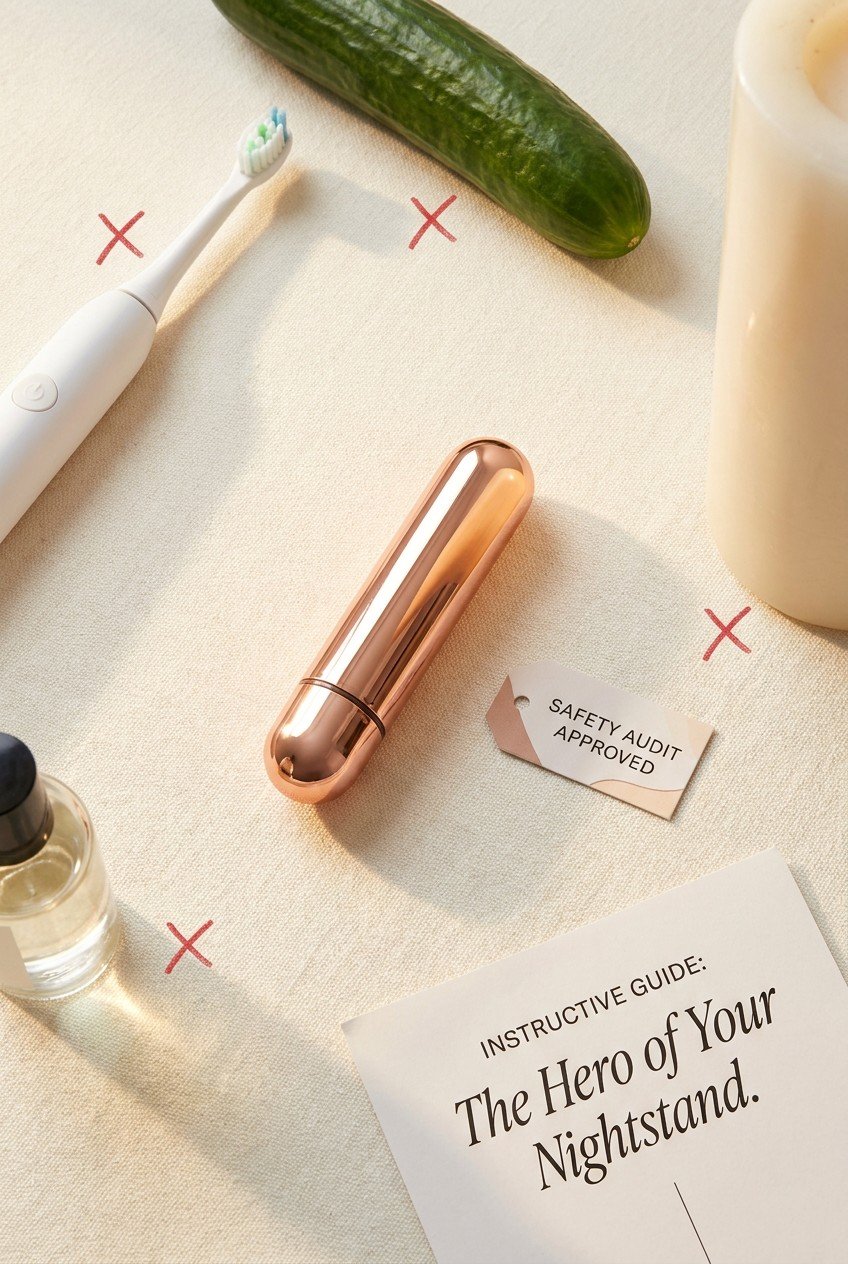



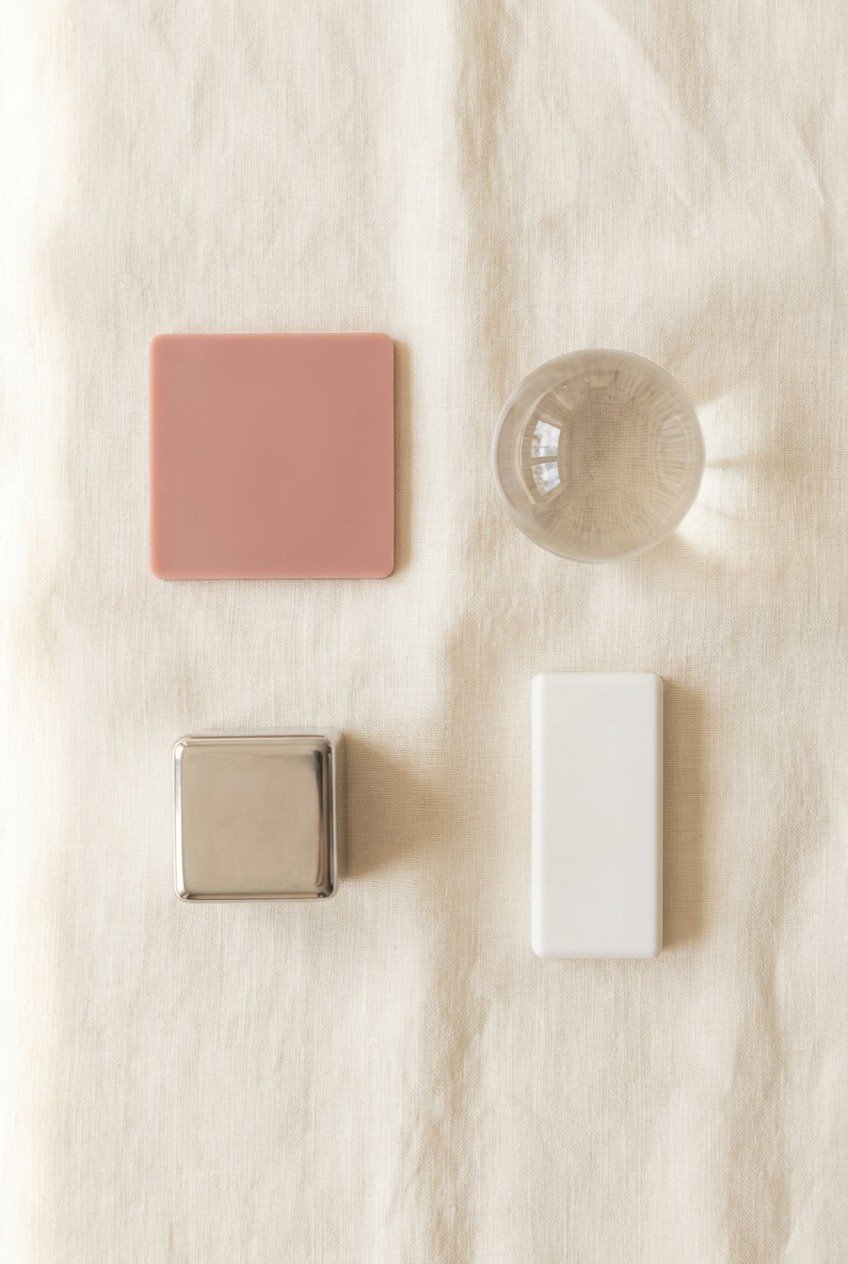
Open your bedside drawer. Pull out the oldest sex toy you own. Do you know what it’s made of?
If you bought it at a gas station, a sex shop that doesn’t specialize in body-safe products, or an Amazon listing under $15, the honest answer is: probably not. And the company that sold it to you isn’t legally required to tell you.
The sex toy industry in most countries — including the United States, Canada, the UK, and the EU — is not required to disclose materials, conduct safety testing, or prove that their products are body-safe before selling them. This is not an oversight. It’s because sex toys are classified as “novelty items,” not medical or consumer products. The same regulatory framework that ensures your water bottle is food-grade and your shampoo is skin-tested doesn’t apply to the objects that go inside your body.
This guide exists to fill that gap. It explains what sex toys are actually made of, which materials are body-safe, which are not, how to test a toy before you buy it, and what to do with the questionable products already in your home. Every material is evaluated on three criteria: body-safety, porosity, and durability.
Before the materials, three terms that determine everything:
A body-safe material doesn’t harbor bacteria, doesn’t leach toxic chemicals, and doesn’t cause allergic reactions when used internally. A body-unsafe material does at least one of these things. There is no body-safe way to use a body-unsafe material long-term inside your body.
Non-porous materials have a solid, sealed surface with no microscopic holes. Bacteria cannot penetrate below the surface. Cleaning with soap and water or a toy cleaner is sufficient — you can fully sanitize a non-porous toy between users and between partners.
Porous materials have microscopic pores — tiny holes — throughout their structure. Bacteria live inside these pores, not just on the surface. You can clean the surface, but you cannot fully sanitize the interior. Porous toys can be used solo indefinitely. They cannot be safely shared between partners without a condom, and they cannot be fully cleaned after extended use.
Most porous toys are made from materials that are also body-unsafe. The combination — porous plus leeching chemicals — is the worst-case scenario. A porous toy that doesn’t leach chemicals is still problematic because you can never fully clean it. A non-porous toy that does leach chemicals is dangerous regardless of its porosity.
Some materials contain additives — most notoriously phthalates — that migrate out of the toy and into your body during use. Phthalates are plasticizers that keep PVC soft. They’re found in many cheap sex toys. They’re classified as endocrine disruptors, linked to reproductive harm, asthma, and cancer in long-term exposure studies. The EU has banned six types of phthalates in sex toys since 2017. The US has banned exactly zero.
Platinum-cured silicone is the benchmark against which all other sex toy materials are measured. Medical-grade silicone is the same material used in implants, surgical instruments, and medical devices that stay inside your body for years. It is hypoallergenic, non-porous, chemically inert, and — when properly manufactured — completely body-safe.
Platinum-cured silicone uses platinum as a catalyst in the curing process. It’s the gold standard. It doesn’t off-gas, doesn’t leach, and is stable indefinitely. Look for “100% platinum-cured silicone” or “medical-grade silicone” on the label.
Tin-cured (tin-catalyst) silicone uses tin as a catalyst. It’s less expensive than platinum-cured and is common in mid-range toys. In most cases, it’s body-safe — but there are documented cases of tin-cured silicones that haven’t fully cured leaching tin compounds. The risk is small but real. For long-term internal use, platinum-cured is the preference.
Condensation-cured silicone is the budget version, typically using tin or other catalysts. It can be body-safe if properly cured but has a higher failure rate. If a silicone toy smells strongly of chemicals, it may not have been fully cured. Return it.
The pinch test: Pinch and twist a small area of the toy with your fingers. Silicone will maintain its shape when released — it bounces back. TPE will stay distorted. Jelly will stay deformed or crack.
The flame test (for advanced users): Hold a flame to a small, inconspicuous area for 3–5 seconds. Silicone chars but doesn’t melt, drip, or produce black smoke. TPE melts, drips, and produces black smoke. Jelly produces acrid black smoke and melts aggressively.
The label: If the product description says “silicone-like,” “TPR-silicone blend,” or “silicone-enriched,” it is not silicone. These are marketing terms for TPE blends. Real silicone is labeled “100% silicone” or “medical-grade silicone.”
The price: You generally get what you pay for. True platinum-cured silicone toys start around 30–40forsmallitems.A10 vibrator claiming to be silicone is almost certainly not.
Pros: Body-safe, non-porous, hygienic, soft but firm, retains body temperature (warms with use), compatible with water-based and oil-based lubricants, can be boiled or run through dishwashers for full sterilization, long lifespan (years with proper care).
Cons: More expensive than alternatives. Can be damaged by silicone-based lubricants (silicone lube reacts with silicone toys, breaking down the surface over time — not immediately, but with repeated use). Cannot be used with silicone-based lubricants.
TPE (Thermoplastic Elastomer) and TPR (Thermoplastic Rubber) are soft-plastic blends that feel similar to silicone but cost a fraction of the price. They’re porous, they can contain unsafe additives, and they’re the primary material in most toys sold at non-specialty retailers, gas stations, and budget Amazon listings.
Porosity: TPE has microscopic pores throughout its structure. Bacteria — including yeast and urinary tract pathogens — colonize these pores and cannot be removed by surface cleaning. For solo use with consistent cleaning, this is manageable. For sharing between partners, TPE toys are not reliably safe regardless of how thoroughly you clean them.
Additives: Unlike silicone, which is a single, stable compound, TPE and TPR are blends — polymers mixed with plasticizers, stabilizers, and other additives to achieve specific properties. These additives can include phthalates, heavy metals, and other compounds that leach into your body during use. TPE manufacturers are not required to disclose their formulations, so there’s no way to know what’s in a given toy.
The “jelly” toy problem: Most jelly toys are TPE. They’re the translucent, rubbery, often strongly scented toys that were ubiquitous in the 2000s and are still widely sold. Jelly toys are almost universally porous and frequently contain unsafe phthalates. They should not be used internally without a condom, and even with a condom, the porous interior is a bacterial concern for solo use over time.
Some manufacturers now produce “phthalate-free TPE.” This addresses the chemical leaching concern but doesn’t fix the porosity issue. A phthalate-free TPE toy is safer chemically but still porous — it can’t be fully sanitized. If you have a phthalate-free TPE toy, use it solo with a condom if you want to be maximally safe, and replace it every 6–12 months.
The smell: TPE toys often have a chemical, rubbery, or “new car smell.” Real silicone has little to no odor, especially after being cleaned and aired out.
The feel: TPE is softer and more “gummy” than silicone. It stretches more easily and doesn’t snap back as crisply.
The label: If the description uses “TPR,” “TPE,” “PVC,” “jelly,” “rubber,” or any “silicon-like” marketing language, it’s not silicone.
ABS (Acrylonitrile Butadiene Styrene) is the hard, smooth plastic used in the casing of most vibrators and in many insertable toys. It’s non-porous, body-safe when used on external surfaces, and hard enough to provide intense pressure and vibration transmission.
Most bullet vibrators, remote-controlled toys, and the hard plastic handles of wand vibrators are ABS. Many insertable toys with hard tips — glass or metal-style designs that are actually plastic — are ABS with a coating or finish.
Pros: Non-porous, easy to clean, compatible with all lubricants (water-based, silicone-based, oil-based), inexpensive, transmits vibration efficiently, can be fully sanitized by boiling (if all-electronic) or wiping with 10% bleach solution.
Cons: Hard surface — can be uncomfortable for some users, especially for insertion without adequate warm-up or lubricant. Temperature-sensitive in a different way than silicone: ABS doesn’t retain body heat, so it can feel cold initially. Can crack or break if dropped on hard surfaces.
The “silicone-coated” problem: Some toys are marketed as silicone but are actually ABS with a thin silicone coating over a hard plastic core. The silicone coating is too thin to be reliably body-safe — it can peel, tear, or harbor bacteria in the seams where the coating meets the core. If you’re paying silicone prices for a toy and it feels hard underneath the surface, ask the manufacturer for clarification.
Borosilicate glass — the same type used in laboratory glassware and high-end kitchenware — is an excellent sex toy material. It’s non-porous, chemically inert, body-safe, and can be sterilized by boiling or bleaching. It’s also the most temperature-responsive material available: it heats and cools rapidly to bathwater temperature, making it the ideal material for temperature play.
Borosilicate glass (Pyrex is the common brand name) is heat-resistant, durable, and non-porous. This is what you want.
Soda-lime glass is the standard glass used in bottles and windows. It’s less durable than borosilicate and can crack under rapid temperature changes. Some cheap glass toys are made from soda-lime glass. Look for toys specifically labeled “borosilicate glass.”
Pros: Beautiful — glass toys can be crafted into artistic shapes that other materials can’t match. Completely body-safe (when borosilicate). Temperature-responsive — hot water bath or freezer for dramatically different sensations. Non-porous — can be fully sterilized. Compatible with all lubricants. Doesn’t degrade. A well-made glass toy lasts a lifetime. Smooth surface is easy to clean. Inert — no off-gassing, no chemical leaching, no allergies.
Cons: Breakable — glass can chip or crack if dropped on hard surfaces, especially porcelain or tile. Inspect before each use for chips or cracks. More expensive than plastic or TPE. Some users find the hard surface uncomfortable — glass offers no give, which is either a feature or a drawback depending on your anatomy and preferences. Heavier than other materials.
Medical-grade or body-safe stainless steel — typically 304 or 316L stainless — is the most durable sex toy material available. It’s non-porous, chemically inert, body-safe, and virtually indestructible with normal use. It’s the material of choice for high-end insertable toys, weighted toys, and anyone who wants a toy that will outlast them.
Not all steel is body-safe. Avoid steel toys that aren’t specifically labeled as medical or body-safe. The safest stainless steels for internal use are:
316L stainless steel (surgical steel): The most common body-safe steel. Marine-grade, corrosion-resistant, hypoallergenic. Used in surgical implants and body jewelry. This is the minimum standard you should accept.
304 stainless steel: Also corrosion-resistant and body-safe. Slightly less corrosion-resistant than 316L but acceptable for sex toy use. Check that it’s specifically labeled body-safe.
Avoid: Chromed steel (chrome plating can peel), steel with painted or coated finishes (the coating may not be body-safe), or any steel toy not labeled medical or body-safe.
Pros: Indestructible. Warms to body temperature or can be heated/cooled with water. Non-porous — fully sterilizable by boiling or bleaching. Compatible with all lubricants. Heavier than other materials, which provides a different quality of pressure and sensation — many users find weighted steel toys uniquely satisfying. No degradation over time. A lifetime investment.
Cons: Expensive — quality steel toys are premium-priced. Heavy — some users find weight uncomfortable for extended use. Cold initially — though it warms quickly with body contact or a warm water bath. Cannot be used with magnetic charging docks if the toy is stainless (magnets don’t work through steel). Limited flexibility — steel doesn’t bend.
Body-safe wood toys are sealed with medical-grade body-safe finishes (food-grade mineral oil, beeswax, or specialized wood finishes rated for internal use). The seal prevents body fluids from penetrating the wood grain. Properly sealed wood toys are non-porous at the surface and body-safe.
The risk: The seal can wear down over time, especially with heavy use. Inspect wood toys regularly. Re-seal with food-grade mineral oil when the finish looks dull or worn. Do not use a wood toy with a compromised seal.
Unsuitable wood: Painted, varnished, or lacquered wood is not body-safe — the finish can chip and the underlying wood is porous. Only oiled or waxed wood toys from manufacturers who specifically state body-safe finishes are acceptable.
Body-safe aluminum is used in some high-end insertable toys. It’s lighter than steel, non-porous, body-safe when anodized (the standard process for body jewelry-grade aluminum), and provides similar temperature responsiveness to steel. Anodized aluminum (particularly 6061 or 7075 aluminum alloy) is hypoallergenic and corrosion-resistant.
Pros: Lightweight compared to steel. Good temperature responsiveness. Durable and corrosion-resistant. Body-safe when anodized. Affordable compared to steel.
Cons: Less widely available. Softer than steel — can dent on hard impacts. Not as premium-feeling as steel.
Natural stone toys — typically jade, quartz, or granite — are non-porous when polished smooth and sealed. They’re the heaviest material option, which some users find pleasurable for grounding and pressure.
The risks: Natural stone can have microscopic fissures even when polished smooth. Quality varies dramatically between manufacturers. Poorly finished stone toys can harbor bacteria in surface imperfections. If you want a stone toy, buy only from a reputable manufacturer who specifies body-safe, polished, sealed stone. Do not use natural stones from craft stores — these are not finished to body-safe standards.
You have toys. You don’t know what they’re made of. Here’s how to find out:
Start with the product page. What does it say?
Smell test: Strong chemical smell = likely unsafe. Real silicone has minimal odor, especially after cleaning and airing out.
Pinch test: Pinch and twist. Returns to shape = likely silicone. Stays distorted = TPE. Cracks or splits = jelly (unsafe).
Surface texture: Smooth, uniform surface = good. Sticky, tacky, or gummy = TPE (and probably unsafe). Visible air bubbles or inconsistencies = cheaply made and likely porous.
Flexibility: Silicone is firm but has some give. ABS is rigid. TPE is very flexible and gummy.
If you have a TPE, PVC, or jelly toy: Use it with a condom. Every time. This protects you from chemical leaching and reduces (but doesn’t eliminate) bacterial concerns. Replace it every 6–12 months as the material degrades.
If a toy is cracked, torn, or has a compromised surface: Throw it away. Cracks harbor bacteria that cannot be cleaned. A torn surface is no longer safe regardless of what the material is.
If a toy caused irritation, burning, or discomfort during use: Stop using it immediately. This is a chemical reaction, usually to phthalates or other additives. Your body is telling you something your label couldn’t.
Not all lubricants work with all materials. Using the wrong lubricant can damage your toy.
| Material | Water-Based | Silicone-Based | Oil-Based |
|---|---|---|---|
| Silicone | ✅ | ⚠️ (over time) | ✅ |
| TPE/TPR | ✅ | ⚠️ (may degrade) | ❌ (breaks down) |
| ABS Plastic | ✅ | ✅ | ✅ |
| Glass | ✅ | ✅ | ✅ |
| Stainless Steel | ✅ | ✅ | ✅ |
| Wood (sealed) | ✅ | ✅ | ✅ |
| Aluminum | ✅ | ✅ | ✅ |
| Stone | ✅ | ✅ | ✅ |
Silicone lubricant on silicone toys: The chemistry is the same — silicone lube can bond with and degrade silicone toy surfaces over repeated use. It’s not an immediate catastrophe, but it’s cumulative. Occasional use is fine. Regular use of silicone lube on silicone toys will shorten the toy’s lifespan.
Oil-based lubricants on TPE/TPR: Oil breaks down TPE. Do not use. The toy will degrade faster and the oil will degrade latex condoms.
The sex toy industry isn’t required to tell you what’s in its products. That’s a political and regulatory failure, not an accident. You are responsible for your own body-safe education — and now you have it.
The hierarchy is simple: platinum-cured silicone, borosilicate glass, and medical-grade stainless steel are the three materials you want for any toy that goes inside your body or against mucous membranes. ABS plastic is acceptable for external-use vibrators and handles. Everything else requires caution, condoms, or avoidance.
When you buy: check the material description. When you can’t verify: assume the worst and use a condom. When you already own questionable toys: use them with condoms, inspect them regularly, and replace TPE and jelly toys every 6–12 months.
Your body deserves to know what you’re putting inside it. Now you know.
Ready to shop? Browse our complete collection — every toy is labeled with its material, and every insertable toy is made from body-safe platinum-cured silicone, glass, or stainless steel. No mysteries. No compromises.
About the Author:
Maya Chen is a product reviewer and pleasure writer at AmorSerere. She has tested over 200 sex toys across 15 years and owns a drawer that now contains only silicone, glass, and steel — because once you know, you know.
Last Updated: July 23, 2026

Real-world product reviewer and sexual wellness advocate. Tests every toy personally so you don’t have to guess