


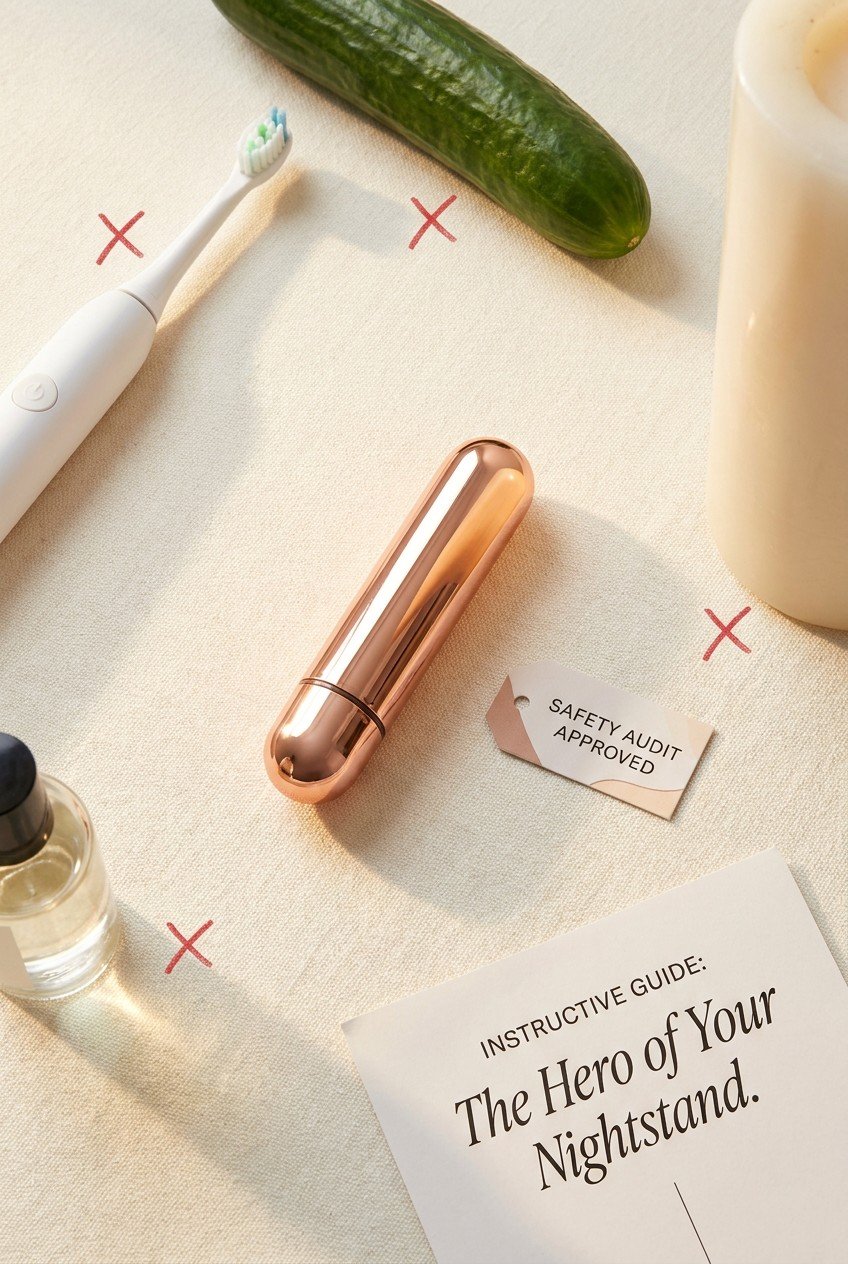


Here are things I have been asked in a professional capacity:
“Will my vibrator make me unable to orgasm with a partner?”
“Can I get addicted to it?”
“Is it true that women who use toys are compensating for something?”
“My friend said if I use a strong vibrator I’ll lose feeling down there forever.”
These are not fringe beliefs. A 2023 study published in the Journal of Sex & Marital Therapy found that over 40% of vibrator users reported at least one worry about dependence, desensitization, or relationship interference — despite no clinical evidence supporting any of those fears.
Sex toys have existed for thousands of years. Modern vibrators were invented by 19th-century physicians as medical devices. Decades of peer-reviewed research have consistently found them to be safe, beneficial, and associated with positive sexual health outcomes. Yet the myths persist — because nobody publishes a study titled “Vibrators Still Don’t Cause Numbness” every year, and rumors travel faster than journal articles.
This article addresses the twelve most persistent sex toy myths. Every answer is backed by available evidence where it exists, and by clinical reasoning where the research is still thin. No scare tactics. No product promotion. Just data and clear answers.
The claim: Regular vibrator use causes permanent nerve damage, making it harder to orgasm without one or reducing sensitivity over time.
The reality: There is zero clinical evidence that vibrators cause permanent desensitization.
Temporary numbness after an intense session? Yes — and it’s completely normal. This is called temporary nerve accommodation, the same phenomenon that makes you stop feeling the chair you’re sitting in or the clothes on your skin. Nerve endings reduce signaling in response to constant stimulation. It’s not damage. It’s your nervous system doing exactly what it evolved to do: stop sending redundant information.
This temporary effect typically resolves within 30–60 minutes. It does not accumulate over time. It does not cause permanent changes to nerve density or sensitivity. A 2009 study in the Journal of Sexual Medicine — the largest clinical study ever conducted on vibrator use — surveyed over 2,000 women and found no association between vibrator use and reduced genital sensitivity. The study instead found vibrator use was associated with higher sexual function scores.
The concern underneath: What most people actually mean when they ask this question is “I can orgasm with my vibrator but not with my partner’s hands or mouth.” That’s not desensitization — that’s habit. Your brain has learned a specific, highly efficient pathway to orgasm (vibration on the clitoris at a specific frequency and pressure). That pathway works fast. Other pathways (hands, oral, penetration) are less efficient because you’ve practiced them less.
This isn’t a problem unless it bothers you. If it does, the fix is variety, not abstinence. For a deeper understanding of how clitoral and internal stimulation pathways differ — and why your body isn’t broken no matter which you prefer — see our guide to clitoral vs. G-spot orgasms. Rotate between vibrator sessions and manual sessions. Try the vibrator on a lower setting. Use your hand to finish sometimes. Your nervous system adapts to variety just as easily as it adapts to routine.
The claim: Vibrators are “addictive” in a clinical sense — users develop tolerance, need escalating stimulation, and experience withdrawal when they stop.
The reality: No. This confuses preference with addiction.
Clinical addiction requires specific neurobiological criteria: compulsive use despite negative consequences, tolerance requiring escalating doses, withdrawal symptoms upon cessation, and functional impairment in daily life. Vibrators do not meet any of these criteria.
You cannot develop a physiological tolerance to vibration the way you can to opioids or alcohol. You cannot experience withdrawal from stopping vibrator use. You cannot be clinically addicted to a vibrator any more than you can be clinically addicted to a showerhead, a pillow, or a specific sleeping position.
What people describe as “addiction” is actually strong preference. If you’ve found a reliable, pleasurable way to reach orgasm, you will naturally prefer it. That’s not pathology — that’s learning. The solution is not “stop using vibrators.” The solution is, if you feel your preference has become limiting, introduce intentional variety. Your brain can maintain multiple pathways to orgasm. It just needs practice on more than one.
The claim: Toys are a replacement for sex, used primarily by single people or people in “unsatisfying” relationships.
The reality: Multiple large-scale surveys consistently find that people in relationships use sex toys at higher rates than single people.
A 2016 study in the Journal of Sexual Medicine found that 52.5% of partnered women and 44.8% of partnered men had used a vibrator, with partnered use being significantly higher than single use in several demographics. A 2017 study by the Kinsey Institute found that couples who used sex toys together reported higher relationship satisfaction and sexual communication scores than couples who did not.
The logic is straightforward: couples who talk about sex openly are more likely to buy toys, and they use those toys as an addition to their shared sex life — not as a replacement for it. A vibrator is not competing with a partner. It’s a tool that partner can use on you, with you, or alongside you. The idea that toys fill a partner-shaped hole is a cultural artifact, not a behavioral reality.
The claim: If a woman uses a vibrator, it signals that her partner is inadequate in bed.
The reality: This framing treats male sexual performance as the center of female pleasure — and it’s inaccurate on every level.
The vast majority of women do not orgasm from intercourse alone. A 2017 study in Archives of Sexual Behavior found that only 18.4% of women reported intercourse alone was sufficient for orgasm, while 36.6% reported needing clitoral stimulation to orgasm during intercourse. This is not a failure of partners. This is anatomy. The clitoris is primarily external. Intercourse primarily stimulates the internal vaginal canal. Most women need external stimulation to orgasm — whether that comes from fingers, a tongue, or a vibrator.
A vibrator is not a verdict on a partner’s skills. It’s a tool that addresses the anatomical reality that intercourse does not reliably stimulate the clitoris. Framing toy use as “partner replacement” makes as much sense as framing a pillow as a mattress replacement. They do different things, and they work better together.
The claim: Needing lube signals inadequate arousal or a sexual dysfunction.
The reality: Lubrication is not a direct readout of arousal.
Vaginal lubrication is influenced by hormones, hydration, medication, cycle phase, stress, and age — not by desire alone. A woman can be fully aroused mentally and emotionally while producing less natural lubrication than she did at 22. This is especially common during perimenopause, postpartum, breastfeeding, or while using hormonal contraception.
Additionally, many activities benefit from added lubrication regardless of natural levels. Anal play requires it for safety. Extended sessions benefit from reapplication. Certain materials (silicone, glass) create more friction than others.
Lubricant is not medical failure. It’s a tool that makes everything feel better, last longer, and stay safer. The stigma around it is a remnant of the belief that female arousal should be visually and physically performative — wetness as proof of desire. That expectation is performance, not pleasure.
Related: The Complete Lube Guide: Water-Based, Silicone & Oil Explained
The claim: Price correlates directly with quality, safety, and experience.
The reality: Materials matter. Motors matter. Brand markup doesn’t.
The most important distinction in vibrator pricing is not 50vs.150 — it’s medical-grade silicone vs. mystery materials, and quality motor vs. buzzy motor. A 35vibratorwithmedical−gradesiliconeandawell−balancedmotorwilloutperforma120 vibrator with mystery “silky-skin” material and a vibration pattern that’s mostly noise.
What you actually pay for above the $90–120 mark:
These are features, not scams. But they’re not safety features. A 40siliconebulletvibratorisassafeasa180 app-controlled wand — the silicone is the same material. Buy premium for the software and the extras. Don’t buy premium because you’re afraid cheaper toys are dangerous. Cheap mystery-material toys are dangerous. Cheap labeled-silicone toys are fine.
The claim: Vibrators and sex toys are products of modern technology and sexual liberation.
The reality: The oldest known dildo is approximately 28,000 years old — a polished siltstone phallus found in a German cave.
Ancient Greek vase paintings depict women using dildos. Han Dynasty Chinese tombs contained bronze and jade phalluses. Edo-period Japan produced elaborate ivory and tortoiseshell insertables. The 19th century saw doctors inventing mechanical vibrators to treat “hysteria” — a catch-all diagnosis for everything from anxiety to sexual frustration. The first electric vibrator was patented in 1880, eight years before the first electric iron and nine years before the first electric fan.
Sex toys are not a trend. They are one of humanity’s oldest continuously manufactured objects. The only thing that’s changed is the marketing.
The claim: Toys belong in a single person’s nightstand. Couples don’t need them.
The reality: As covered in Myth 3 and 4, couples are a primary market for sex toys — and sex therapists routinely recommend them as tools for improving partnered sex.
Common partnered uses:
Far from being “solo-only,” many toys are specifically designed for partnered use. A vibrating cock ring is useless solo. A rabbit is designed for simultaneous stimulation during partnered sex as much as during masturbation. The distinction between “solo toys” and “couples toys” is marketing taxonomy, not functional reality.
Related: The Ultimate Couples Sex Toys Guide
The claim: Strong vibrations weaken or damage the pelvic floor muscles, leading to incontinence or prolapse.
The reality: There is no evidence linking vibrator use to pelvic floor damage. If anything, vibrators can help pelvic floor awareness.
The pelvic floor is a sling of muscles at the base of the pelvis. It’s designed to handle the force of childbirth — an event that exerts orders of magnitude more pressure than any vibrator motor. External vibration cannot “loosen” or “weaken” these muscles. The mechanism doesn’t exist.
In clinical practice, vibrators are sometimes used as part of pelvic floor physical therapy — not as a cause of dysfunction, but as a tool for helping patients become aware of and relax hypertonic (overly tight) pelvic floor muscles. The myth likely originates from confusion between vibration and internal pressure — and between pelvic floor weakness (inability to contract) and pelvic floor hypertonicity (inability to relax), which are opposing conditions with different causes.
The claim: A quick wipe or rinse between partners is sufficient hygiene.
The reality: Bodily fluids can carry bacteria, viruses, and yeast that survive on surfaces. “Wiping off” removes visible residue. It does not disinfect.
For toys that are non-porous (silicone, glass, metal, ABS plastic): wash thoroughly with soap and warm water between partners, or boil for 5–10 minutes (silicone only), or wipe with a 70% isopropyl alcohol solution, air-dry completely. For toys that are porous (TPE, rubber, jelly): do not share them. Porous materials cannot be fully disinfected. Bacteria penetrate the material surface where cleaning can’t reach.
The gold standard for partnered use: each person uses their own toy, or use a condom over a shared toy and change it when switching partners. This is especially important for anal-to-vaginal use or for use between partners where one has an infection risk the other doesn’t.
Related: How to Clean Your Vibrator: A Step-by-Step Guide
The claim: You can store silicone toys however you want. They’re inert.
The reality: Silicone is chemically stable, but it has two vulnerabilities: other silicone and silicone-based lubricant.
As addressed at length in our storage guide: two silicone toys stored in contact will eventually fuse. Silicone-based lubricant left on a silicone toy will bond with the surface, creating a permanent sticky layer. Silicone also degrades when exposed to high heat beyond boiling (over 200°C / 392°F), undiluted bleach soaks, or prolonged UV exposure.
Proper silicone care: wash with mild soap, air-dry fully, store in individual cloth pouches or separated compartments, use water-based lube (or hybrid with caution), and don’t boil toys with electronic components. It’s not a lot of maintenance. But “none at all” eventually destroys the toy.
Related: How to Store Your Sex Toys | Body-Safe Sex Toy Materials
The claim: Toys are a female-market product. Men don’t use them.
The reality: Male sex toy sales have grown every year for the past decade, and surveys consistently find that 40–50% of men have used a sex toy at some point — a number that rises significantly in younger demographics.
The male toy market includes masturbators (strokers, sleeves, automatic devices), cock rings, prostate massagers, penis vibrators, and couples’ toys designed for male use. The historical lack of visibility has nothing to do with demand and everything to do with stigma — the same stigma that makes men reluctant to admit toy use in surveys even while purchasing them.
In 2024, male sex toys accounted for roughly 35% of the total sex toy market by revenue. The remaining gap between that number and 50% is likely explained by stigma-driven underreporting, not lack of use.
Related: The First-Timer’s Honest Guide to Male Masturbation Toys
Sex toy myths survive because three conditions keep feeding them:
A simple filter for the next myth you hear: If the claim is scary, specific, and unsupported by any link to research — be skeptical. If the claim makes you feel broken, abnormal, or at risk — be more skeptical. Most things that sound too alarming to be true, in the context of sex, are not true.
Twelve myths. Twelve answers. Here’s the unified version:
Vibrators don’t cause permanent numbness, addiction, or pelvic floor damage. Using toys doesn’t mean your partner is inadequate or your relationship is failing. Sex toys have existed for 28,000 years, are used by couples more than singles, and are not a modern perversion of anything. Silicone needs separate storage, lube is not a failure flag, and men use toys too — whether they admit it in surveys or not.
If you remember one thing from this article, let it be this: almost everything you’ve heard about the “dangers” of sex toys originated from people who had never studied sexual health and were embarrassed to ask. The research is available. The answers are clear. And none of them require you to be afraid of your nightstand drawer.
About the Author:
Dr. Yuki Tanaka is a sexual health educator and pleasure researcher at AmorSerere. With a PhD in human sexuality and 8 years of clinical education experience, Dr. Tanaka has spent her career translating peer-reviewed research into clear, stigma-free guidance. She has answered “is my vibrator safe” more times than any human should have to, and she will keep answering it until the myths stop spreading.
Last Updated: July 11, 2026

Clinical sex educator with 10+ years experience. Specializes in body-safe materials and sexual wellness education.