






I was 14 when I had my first orgasm. I had no idea what was happening. One moment I was — let’s be honest — experimenting in the shower, and the next moment everything went tight and released and I thought I’d broken something.
Nobody told me it was coming. Nobody told me what it would feel like. Nobody told me that the clear fluid before the white stuff was normal, that the refractory period was real, or that the orgasm I’d just experienced was actually the most basic version available to me — the starter model. I’d spend the next ten years thinking that was the whole menu.
Here’s what I know now, at 30-something, after a lot more experience and a lot less shame: male orgasm is more varied, more learnable, and more interesting than most men ever discover. Prostate orgasms exist. You can orgasm without ejaculating. You can have multiple orgasms. You can learn to separate orgasm from ejaculation entirely. And almost none of this information reaches the average guy before he’s spent decades on the starter model.
This guide covers the full landscape of male orgasm — anatomy, techniques for different orgasm types, the role of the prostate, edging and orgasm control, and the conversation about “lasting longer” that most sex advice gets wrong. It’s written for men who want more than they were taught to expect from their own bodies, and for partners who want to understand male pleasure beyond the five-minute script.
The way most men describe orgasm is incomplete: “I get hard, I feel good, I ejaculate, it’s over.” This describes one type of orgasm — the ejaculatory orgasm from penile stimulation. It leaves out everything else.
Male orgasm consists of two distinct physiological events that typically happen together but can be separated:
Emission: The internal phase. The vas deferens, seminal vesicles, and prostate contract, moving seminal fluid into the urethra. This is the “point of no return” — the moment you feel orgasm is inevitable. The pelvic floor muscles begin rhythmic contractions you can’t consciously stop.
Ejaculation: The external phase. The pelvic floor muscles (specifically the bulbospongiosus and ischiocavernosus muscles) contract rhythmically, expelling semen through the urethra. These contractions are what you feel as the orgasm itself — typically 5–8 contractions, each about 0.8 seconds apart.
The key insight: Emission and ejaculation are controlled by different neural pathways. Emission is sympathetic (fight-or-flight branch of the autonomic nervous system). Ejaculation is somatic (voluntary muscle control, though the contraction is involuntary once triggered). This separation is why it’s possible to orgasm without ejaculating — the contractions can happen without the emission phase.
They usually happen together. They’re not the same thing.
Orgasm is the peak of sexual pleasure — the rhythmic contractions, the release of tension, the altered consciousness state that follows. Ejaculation is the expulsion of semen. They share the same three-second window in most men’s experience, but they’re distinct physiological events.
Men who have learned to separate them — either through training or through prostate-focused stimulation — report that non-ejaculatory orgasms feel different: more diffuse, more full-body, less concentrated in the penis, and capable of being repeated multiple times without a refractory period.
After ejaculation, most men enter a refractory period during which further erection and orgasm are physically impossible. The duration varies from minutes (in teenagers) to hours or days (in older men). The primary neurotransmitter involved is prolactin — it spikes after ejaculation and suppresses dopamine, the driver of sexual arousal.
What affects refractory period:
Edging is the practice of bringing yourself close to orgasm, then stopping stimulation before the point of no return, waiting for the urge to subside, and starting again. Repeat multiple times before finally allowing orgasm.
Why it works: Each near-orgasm cycle builds more tension in the pelvic floor and more arousal in the nervous system. The final orgasm is more intense — sometimes dramatically so — because you’ve accumulated more neuromuscular tension before release.
How to do it:
The learning curve: The first few times, you’ll overshoot — you’ll think you’re at an 8, but you’re actually at a 9.5 and you’ll ejaculate involuntarily. This is normal. The skill is learning to read your own arousal before the point of no return, which takes practice.
Partner edging: Your partner controls the stimulation and the pauses. This requires communication — one squeeze of their hand means “stop,” two squeezes means “keep going.” A partner who edges you is learning your arousal cues better than you know them yourself.
The male orgasm isn’t just about friction on the shaft. Varying stimulation engages different nerve pathways:
Frenulum focus: The most sensitive spot on the penis is the frenulum — the small band of tissue on the underside where the glans meets the shaft. Focused stimulation there produces a qualitatively different arousal pattern than shaft-focused stroking.
Perineum pressure: The perineum — the area between the scrotum and anus — is the external access point for the prostate. Firm external pressure here during ejaculation intensifies orgasm for many men.
Testicle involvement: Gentle cupping or light pulling of the testicles during arousal — not during the orgasm itself, when they retract and become sensitive — adds a different dimension of sensation.
Vibration: Most men have never used a vibrator on themselves. The glans and frenulum respond to vibration just as the clitoris does — different nerve endings fire in patterns that manual stimulation can’t produce. A vibrating cock ring. A wand vibrator held against the frenulum. Try it before you dismiss it.
The prostate is a walnut-sized gland located about 2–3 inches inside the rectum, toward the front of the body (toward the belly button). It surrounds the urethra. It produces a significant portion of seminal fluid.
It’s also densely packed with nerve endings — as many as the glans of the penis — and responds to pressure, vibration, and rhythmic massage with a qualitatively different type of orgasm than penile stimulation alone.
Prostate stimulation is associated — unfairly — with homosexuality, because the primary access point is the rectum. This association is anatomically ignorant. The prostate is present in all men. Its nerve supply doesn’t change based on sexual orientation. A heterosexual man’s prostate responds to stimulation exactly the same way a gay man’s does — because it’s the same organ, with the same nerves, in the same location.
The shame around anal stimulation in heterosexual men is a cultural artifact, not a biological reality. You’re not “less straight” for stimulating an internal organ that produces seminal fluid and is wired directly into your orgasmic pathways. You’re anatomically informed.
External (non-insertive): Press firmly on the perineum — the area between the scrotum and anus — with two fingers. The prostate sits directly above this area. External pressure transmits through the tissue to the prostate. This is the easiest entry point for men uncomfortable with internal stimulation.
Internal (finger): Lubricated finger, inserted gently into the rectum, curling forward toward the belly button. The prostate feels like a small, firm, walnut-sized bump on the front wall. Gentle, rhythmic pressure — not poking, not rapid — produces a deep, diffuse sensation distinctly different from penile stimulation.
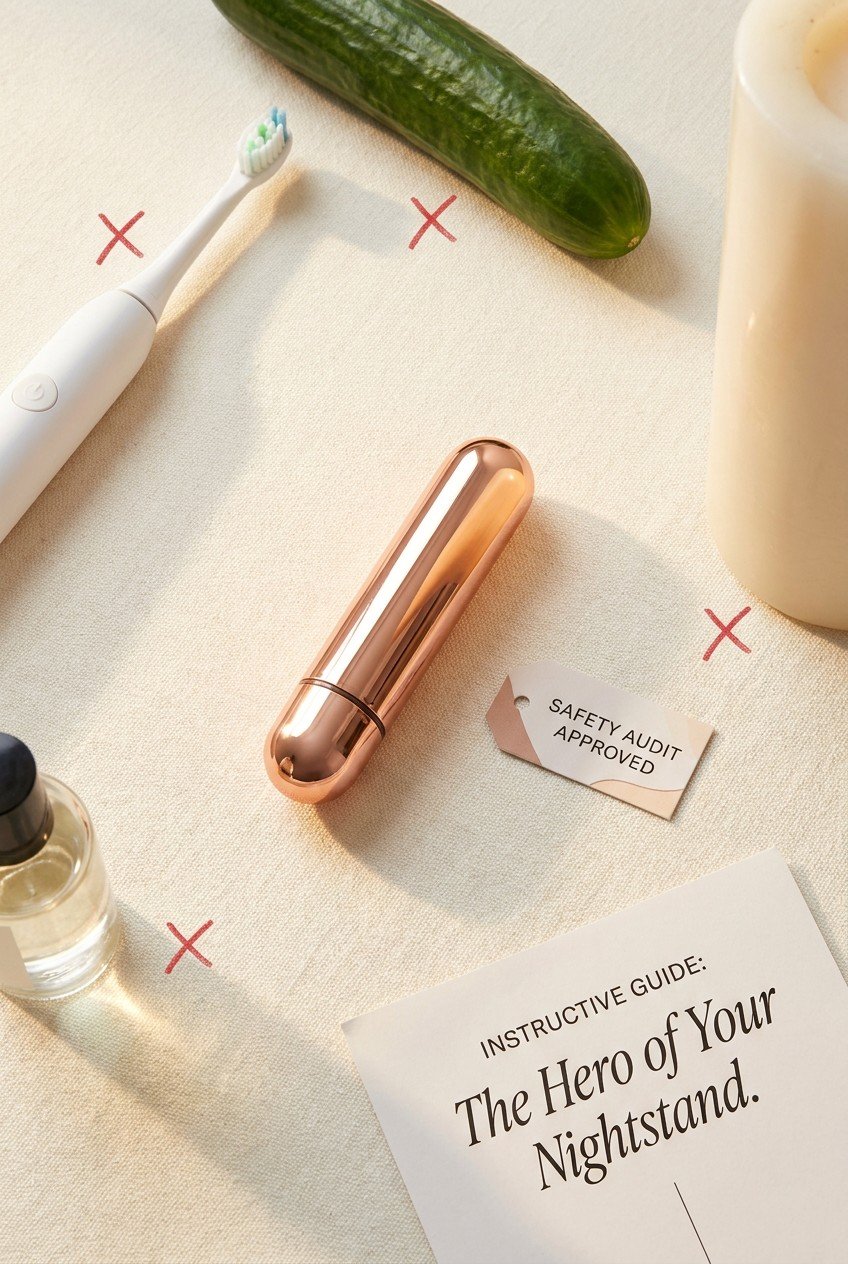
Internal (toy): Prostate massagers are curved toys designed to reach the prostate comfortably. They’re safer than fingers (no nail concerns) and apply consistent, hands-free pressure. (Make sure yours is medical-grade silicone — read our body-safe materials guide before buying anything insertable.) A basic prostate massager costs $30–50 and is the single most transformative purchase most men will ever make for their sexual experience.
A prostate orgasm feels different from a penile orgasm. Men who’ve experienced both describe it as:
Combined prostate + penile orgasm: Stimulating the prostate during penile orgasm — either externally through the perineum or internally — produces the most intense orgasm most men will ever experience. The two nerve pathways converge on the same spinal segments, producing a summation effect: 1 + 1 = 3.
The male multiple orgasm is real, documented in sexological literature for decades, and requires training.
Remember the separation of orgasm from ejaculation? That’s the mechanism. If you can experience the rhythmic pelvic floor contractions (orgasm) without triggering emission (the internal phase that moves semen into the urethra), you can have an orgasm without a refractory period. Then you can have another one. And another.
Step 1: Strengthen your pelvic floor. Kegel exercises — repeatedly contracting and releasing the muscle you use to stop urinating mid-stream. 10 contractions, held for 5 seconds each, 3 times per day. Strong pelvic floor muscles give you more control over the orgasmic reflex.
Step 2: Learn to identify the point of no return. During masturbation, pay attention to the exact moment when emission begins — the internal sensation of fluid moving into the urethra. This is a half-second before ejaculation itself. Learn to recognize this specific sensation.
Step 3: At the point of no return, stop all stimulation and contract your pelvic floor. Squeeze hard — as if you’re trying to stop urination. Hold the contraction through the first few seconds of what would have been ejaculation. The rhythmic contractions will occur — you’ll feel them — but without the expulsion of semen.
Step 4: Wait 10–15 seconds for the arousal to settle slightly (not to baseline — just a notch down from peak). Resume stimulation. Because you didn’t ejaculate, prolactin didn’t spike, and the refractory period didn’t trigger.
Step 5: Repeat. Three, four, five orgasms in a single session. Each one feels different — the later ones are often described as deeper, more emotional, more full-body.
Important: Non-ejaculatory orgasms are a skill. They take weeks or months of practice. You will “fail” — ejaculate involuntarily — dozens of times before you succeed. This is not failure. This is your nervous system learning a new pattern. The first time you orgasm without ejaculating, you’ll understand why it was worth the practice.
A non-ejaculatory orgasm is NOT retrograde ejaculation. In retrograde ejaculation, semen goes backward into the bladder instead of forward through the urethra. This can happen naturally in some men, and it’s a side effect of certain medications. The non-ejaculatory orgasm through pelvic floor control doesn’t involve emission at all — no fluid is moved into the urethra in either direction.
If you’re squeezing your pelvic floor to prevent ejaculation and consistently feel no fluid expulsion but no negative effects: you’re likely achieving a dry orgasm. If you experience discomfort, cloudy urine after orgasm, or any other unusual symptoms: see a urologist.
Most sex advice for men focuses on one metric: duration. The assumption is that longer = better, and that the man who “came too fast” has failed.
This is a terrible assumption.
Most heterosexual intercourse lasts 3–7 minutes of active thrusting, according to studies. Despite what pornography suggests — 20, 30, 45 minutes of continuous penetration — the actual human average is much shorter. The pornographic depiction of duration is a performance, sometimes shot over multiple sessions, sometimes chemically assisted, always edited.
If your partner is satisfied with 5 minutes and you’re satisfied with 5 minutes, you have no problem. The problem isn’t the duration — it’s the anxiety about the duration, which is a cultural script, not a physiological failure.
If ejaculation consistently happens within 1–2 minutes of penetration and causes distress, the clinical term is premature ejaculation. It’s treatable.
Evidence-based techniques:
If you’re worried about lasting longer, ask your partner: “How do you feel about how long penetration usually lasts? Is there anything you want more of or less of?”
Many men discover that their partner doesn’t care about duration — they care about whether they orgasm too, whether there’s enough foreplay, whether they feel desired versus performed at. The “lasting longer” anxiety is often a solo project. Your partner may not have signed up for it.
Peak testosterone. Shortest refractory period. Highest ejaculatory volume and force. This is the “standard” male orgasm that most cultural scripts are based on — and it’s not what sex will look like for the rest of your life. Enjoy it, but don’t make it your identity. Your orgasm will change. That’s aging, not decline.
Testosterone begins its slow decline (~1% per year after 30). The refractory period lengthens. Ejaculatory force decreases. The upside: many men report that orgasms become more emotionally integrated — less of a purely physical reflex and more of a whole-body experience. This is also the decade when most men become interested in prostate stimulation and different orgasm types, as the simple penile orgasm becomes less novel and less satisfying on its own.
Prostate changes (enlargement, the beginning of BPH) affect ejaculation — volume decreases, force decreases. Some medications (alpha-blockers for BPH) cause retrograde ejaculation as a side effect. Erectile changes become more common. The cultural script that “sex ends at 50” is a lie, but the sex is different — slower, less ejaculation-focused, more sensation-focused. Men who can adapt to this shift report continued sexual satisfaction into their 70s and 80s. Men who cling to their 25-year-old orgasm as the only “real” kind report frustration.
The takeaway: The male orgasm changes over a lifetime. Fighting it is misery. Learning the new landscape is liberation.
Temporary desensitization happens — the nerves habituate to a specific type of stimulation. This is why “death grip syndrome” (masturbating with extremely firm pressure that a partner’s body can’t replicate) can make partnered orgasm difficult — your nervous system has learned to require a specific, intense stimulus that intercourse doesn’t provide.
The fix: vary your masturbation technique. Use different grips, different pressures, a different hand. Use lubricant. Use a toy occasionally. Keep your nervous system flexible by exposing it to varied stimulation rather than training it on one specific pattern.
Short-term abstinence (7 days) shows a small, temporary testosterone spike in some studies. Long-term abstinence shows no effect. The “NoFap” testosterone claims are dramatically overblown. Testosterone is primarily regulated by sleep, diet, exercise, and body composition — not ejaculation frequency.
Post-coital dysphoria (PCD) — feeling sad, anxious, or irritable after sex — affects both men and women. Prevalence is estimated at 30–40% of men experiencing it at least once. It’s not well-understood neurochemically but likely involves the rapid hormonal shifts after orgasm (prolactin spike, dopamine drop, oxytocin fluctuation).
If it’s occasional and mild: it’s within normal range. If it’s consistent and distressing: talk to a therapist or sexual health specialist. It’s not something you have to live with silently.
Yes. Read our guide to talking about sex toys with your partner. A vibrating cock ring during partnered sex gives you enhanced sensation and gives your partner external clitoral stimulation. A prostate massager used occasionally — alone or with a partner — expands your sexual repertoire. The weirdness is 100% cultural and 0% physical.
The male orgasm I learned about at 14 was a starter model. Most guys never upgrade. They spend decades having the same basic penile orgasm, wondering if there’s more, suspecting there might be, but never quite curious enough — or comfortable enough — to find out.
Here’s what’s available: prostate orgasms that feel like your entire pelvis is lighting up. Edged orgasms so intense they leave you staring at the ceiling for five minutes. Non-ejaculatory orgasms that let you go again and again. Pelvic floor control that turns orgasm from an involuntary reflex into a conscious skill.
None of this requires new hardware. It requires new information and the willingness to experiment with your own body — which, for a lot of men, is the real barrier. We’re taught that male sexuality is simple: see, get hard, penetrate, ejaculate, done. Admitting there might be more to learn feels like admitting incompetence.
It’s not incompetence. It’s curiosity. And the reward for that curiosity is an orgasm you didn’t know your body was capable of.
Want to explore? Check out our prostate massagers and couples’ toys. Everything ships in a plain box. The only person who needs to know what’s inside is you.
About the Author:
Sam Rivera is a sex and relationships writer at AmorSerere. He was 14 when he had his first orgasm, 28 when he had his first prostate orgasm, and 31 when he finally stopped believing that male sexuality began and ended with the penis. He writes for men who suspect there’s more to their own bodies than they’ve been told — because there is.
Last Updated: July 21, 2026

Writer and relationship coach focused on intimacy, communication, and connection.